

Buying a home is one of the biggest financial and lifestyle decisions you may ever make. important factors to consider before buying a home Whether you are purchasing your first property, upgrading to a larger house, or looking for a long-term investment, careful planning is essential.
A property may look perfect during a quick viewing. However, there can be important details hidden behind the asking price, location, condition, financing, and legal paperwork. Therefore, knowing the important factors to consider before buying a home can help you make a more informed decision.
Your budget, mortgage, location, neighborhood, property condition, maintenance costs, legal documents, and future needs should all be considered before making an offer. Additionally, you should understand the complete cost of homeownership rather than focusing only on the property’s purchase price.
The Consumer Financial Protection Bureau recommends considering not only the down payment but also closing costs, moving expenses, renovations, and an emergency financial cushion when preparing to buy a home.
1. Determine Your Home Buying Budget
The first step is to establish a realistic home buying budget. Before looking at properties, review your income, savings, existing debts, regular expenses, and financial goals.
Importantly, do not assume that the maximum amount a lender may offer is the amount you should spend.
Your actual housing costs may include:
- Mortgage payments
- Property taxes
- Home insurance
- Maintenance and repairs
- Utilities
- Homeowners association fees, where applicable
- Closing costs
- Moving expenses
- Renovations and furnishings
Consequently, leaving room in your budget for unexpected expenses is essential. A home should fit comfortably into your financial life rather than creating constant financial pressure.
2. Understand the Total Cost of Buying a Home
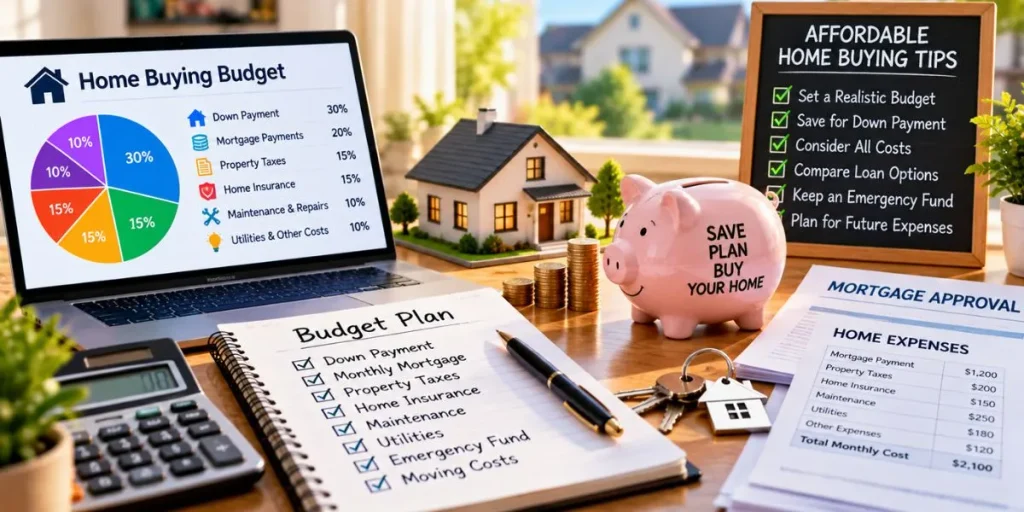
The purchase price is only one part of the cost.
Depending on your location and transaction, you may also have to pay for inspections, appraisals, loan fees, title-related services, taxes, insurance, registration, and other closing expenses.
For example, the CFPB explains that mortgage-related costs can include lender charges, points, appraisal and title services, government fees, prepaid expenses, and other home-buying costs.
Therefore, ask for a clear breakdown of the money you will need before and at closing.
3. Compare Mortgage and Home Loan Options
If you need financing, compare available mortgage options carefully.
Look beyond the advertised interest rate. Instead, consider the complete loan package, including:
- Interest rate
- Loan term
- Monthly payment
- Down payment requirements
- Mortgage insurance, where applicable
- Origination and lender fees
- Prepayment conditions
- Closing costs
- Total borrowing cost
A lower monthly payment does not necessarily mean a cheaper loan because it may involve a longer repayment period or higher upfront costs.
Before committing, compare loan estimates and ask the lender to explain anything you do not understand. The CFPB recommends checking the loan amount, interest rate, estimated total monthly payment, closing costs, and cash needed to close.
4. Choose the Right Location
Location is one of the most important factors when buying a home because you cannot change it later.
Consider how convenient the property is for your everyday life. For example, check the distance to:
- Work
- Schools
- Hospitals
- Supermarkets
- Public transportation
- Parks
- Restaurants
- Major roads
- Other essential services
Furthermore, think about traffic, noise, parking, and accessibility.
A beautiful house may become frustrating if your daily commute is too long or essential services are difficult to reach.
5. Research the Neighborhood

Choosing the right home also means choosing the right neighborhood.
Visit the area at different times of day and, if possible, on different days of the week. This can help you understand traffic, noise, parking, activity levels, and the general environment.
Also, research planned developments and infrastructure projects. New transportation facilities, schools, businesses, or shopping areas may affect the area’s future appeal. However, construction, congestion, or increased traffic could also create disadvantages.
Therefore, consider both the current neighborhood and its potential future changes.
Read More: Major Trends Shaping the Future of Journalism
6. Evaluate the Home’s Size and Layout
A home’s size should match both your current lifestyle and your future needs.
Consider the number of bedrooms and bathrooms, storage space, parking, outdoor areas, kitchen layout, and living spaces.
For example, someone working from home may need a dedicated office, while a growing family may eventually need additional bedrooms.
Moreover, a well-designed layout can sometimes be more practical than a larger home with poorly organized spaces.
7. Get a Professional Home Inspection
A professional home inspection can reveal problems that are difficult to identify during a normal viewing.
An inspection may examine areas such as:
- Foundation and structure
- Roof
- Plumbing
- Electrical systems
- Windows and doors
- Heating and cooling systems
- Walls and ceilings
- Drainage
- Signs of water damage
The CFPB recommends arranging an independent inspection early enough to give buyers time to understand serious problems and decide how to proceed.
An inspection is different from an appraisal. An appraisal generally assesses value for lending purposes, while an inspection focuses on the physical condition of the property.
8. Check Property Documents and Legal Details
Before buying a property, make sure the ownership and legal documentation are properly reviewed.
Depending on your jurisdiction, this may involve checking:
- Property title
- Ownership records
- Property taxes
- Building permits
- Land records
- Liens or claims
- Community or association rules
- Required certificates or approvals
Legal requirements vary considerably between countries and regions. Therefore, if you are unsure about ownership, contracts, title issues, or other legal matters, consult a qualified local property professional or lawyer.
Do not rely solely on verbal promises when important terms should be documented.
9. Consider Maintenance and Repair Costs
A home can become expensive after purchase if you underestimate maintenance.
Older properties may require more frequent repairs. However, even newer homes can eventually need work on appliances, plumbing, roofing, electrical systems, air conditioning, landscaping, and other components.
Therefore, ask yourself whether you can comfortably handle both routine maintenance and unexpected repairs.
Also, remember that attractive features such as swimming pools, large gardens, or extensive outdoor areas may increase ongoing maintenance costs.
10. Think About Future Resale Value
Even if you intend to live in the home for many years, it is sensible to consider its potential resale appeal.
Factors that may influence buyer demand can include:
- Location
- Neighborhood amenities
- Transportation
- Property condition
- Layout
- Parking
- Storage
- Energy efficiency
- Local housing conditions
However, future property values are never guaranteed. Market conditions can change significantly. Therefore, treat resale potential as one consideration rather than a promise of future profit.
11. Avoid Emotional Home Buying Decisions
Buying a home can be exciting. Consequently, it is easy to become attached to a property because of attractive decoration, beautiful views, or an impressive presentation.
Nevertheless, emotions should not replace financial and practical evaluation.
Compare similar properties, review the costs, inspect the condition, and consider whether the property actually meets your needs.
If a home exceeds your comfortable budget or has significant unresolved problems, be prepared to reconsider the purchase.
12. Review Everything Before Closing
Before completing the transaction, carefully review the final documents and costs.
Check that the agreed purchase price, loan terms, fees, credits, taxes, insurance, and other important figures match your expectations.
The CFPB advises buyers to compare closing documents with earlier loan estimates and question significant differences in closing costs or cash required to close.
Additionally, conduct a final walkthrough where appropriate. Confirm that agreed repairs have been completed and that items included in the sale are still present.
Most importantly, do not rush through documents you do not understand.
Home Buying Checklist
Before buying a home, consider the following:
- ☐ Set a realistic home buying budget
- ☐ Review income, savings, and debts
- ☐ Calculate the total cost of ownership
- ☐ Compare mortgage or home loan options
- ☐ Research the location
- ☐ Visit the neighborhood at different times
- ☐ Evaluate the home’s size and layout
- ☐ Arrange a professional inspection
- ☐ Review property and legal documents
- ☐ Estimate maintenance and repair costs
- ☐ Check insurance and property-related costs
- ☐ Consider future lifestyle needs
- ☐ Research comparable properties
- ☐ Consider potential resale demand
- ☐ Review final closing documents carefully
Frequently Asked Questions
What are the most important factors to consider before buying a home?
The most important factors include your budget, total ownership costs, financing, location, neighborhood, property condition, legal documents, maintenance requirements, lifestyle needs, and potential resale considerations.
How do I know if I can afford a home?
Start by reviewing your income, savings, debts, monthly expenses, and available emergency savings. Then consider the complete monthly housing cost rather than only the mortgage payment.
Why is location important when buying a home?
Location affects convenience, commuting, access to services, neighborhood conditions, and potentially future buyer demand. Unlike many property features, location cannot be changed.
Should I get a home inspection before buying?
A professional inspection can help identify physical problems that may not be obvious during a normal viewing. It can also give you useful information before completing the purchase.
What documents should I check before buying a property?
Documents vary by jurisdiction, but they may include ownership records, title documents, tax records, permits, certificates, and community or association documents. Local legal requirements should always be checked.
Final Thoughts
Buying a home is about much more than finding an attractive property at an acceptable price. The important factors to consider before buying a home include your finances, financing options, location, neighborhood, property condition, legal documentation, maintenance costs, and long-term plans.
Therefore, take your time and research carefully. Compare properties, inspect the home, understand the complete costs, and review important documents before committing.
Ultimately, the right home should fit your budget, lifestyle, current needs, and future plans. A careful buying process can help you avoid unnecessary surprises and make a more informed property decision.
Disclaimer: This article provides general educational information and is not legal, financial, mortgage, tax, or real-estate advice. Property laws, taxes, financing rules, inspection requirements, and closing procedures vary by country and jurisdiction. Consult qualified local professionals before making a property purchase.
