
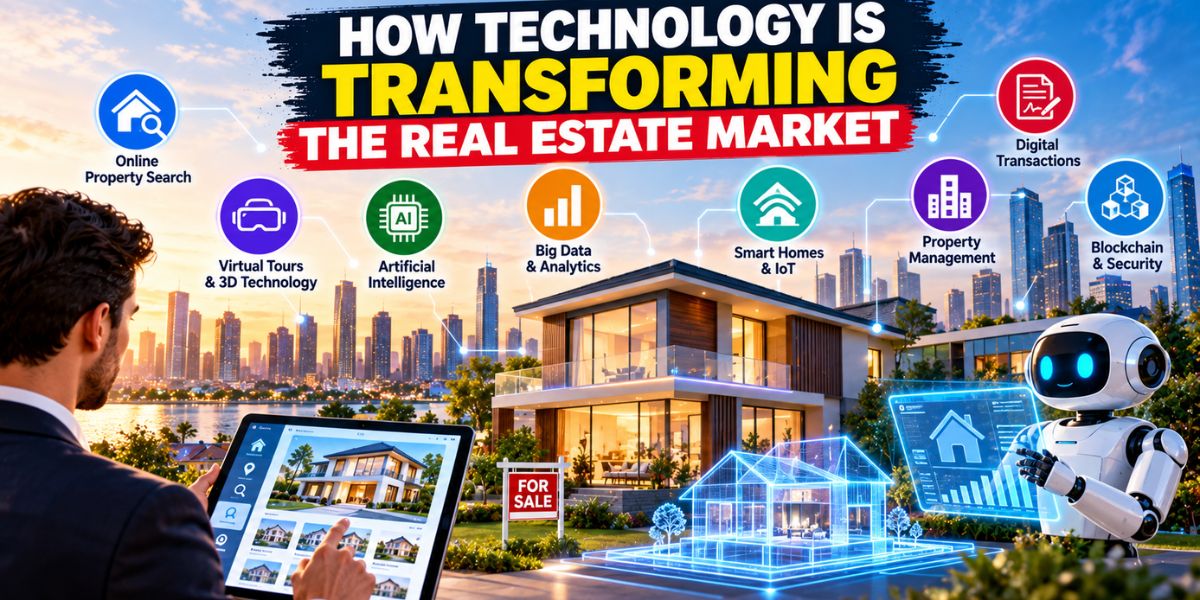
Technology has changed the way people live, work, communicate, and make financial decisions. how technology is transforming the real estate market As a result, the real estate industry is also experiencing a major digital transformation. From online property searches and virtual tours to artificial intelligence, smart homes, and digital transactions, technology is making real estate more connected and accessible.
Today, buyers can explore properties from their smartphones, sellers can market homes to wider audiences, and real estate professionals can use data to understand market trends. At the same time, property managers can automate routine tasks and communicate with tenants through digital platforms.
In this article, we will explore how technology is transforming the real estate market, the major benefits it offers, the challenges it creates, and what the future of real estate technology may look like.
What Is Real Estate Technology?
Real estate technology, often called PropTech, refers to digital tools and technologies used throughout the property industry. These technologies can support buying, selling, renting, investing, developing, marketing, and managing properties.
For example, online property platforms help buyers discover homes, while artificial intelligence can analyze property information. Similarly, virtual reality can provide immersive property tours, and digital transaction platforms can simplify paperwork.
Therefore, technology is no longer limited to property websites. Instead, it is becoming part of almost every stage of the real estate process.
1. Online Property Search Is Changing Home Buying
One of the most noticeable changes in real estate is the growth of online property searches.
Previously, buyers often depended on newspaper advertisements, property agents, and physical visits to discover available homes. Now, however, buyers can browse thousands of listings through websites and mobile devices.
Online platforms can provide:
- Property photographs
- Prices and property details
- Floor plans
- Location information
- Neighborhood details
- Property comparison tools
- Search filters
As a result, buyers can create a shortlist before visiting properties in person. This can save considerable time and make the early stages of home buying more convenient.
2. Artificial Intelligence Is Transforming Real Estate
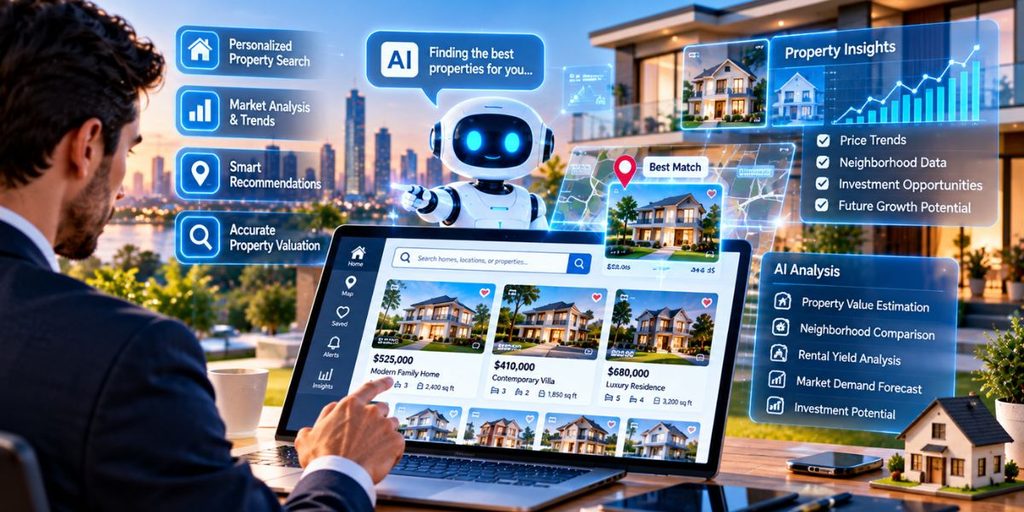
Artificial intelligence is becoming an important part of modern real estate technology.
AI systems can process large amounts of information and identify patterns that may be difficult to analyze manually. For example, AI can assist with property recommendations, market analysis, customer inquiries, marketing content, and administrative tasks.
AI-powered chatbots can also answer common questions and respond to potential buyers at different times of the day.
Furthermore, AI can help personalize property searches. Instead of displaying hundreds of unrelated listings, technology can use preferences such as location, budget, property type, and previous searches to present potentially relevant options.
However, AI-generated information should still be reviewed carefully because automated systems can produce inaccurate or incomplete results.
3. Virtual Tours Are Improving Property Viewing
Virtual tours have changed the way properties can be presented to potential buyers.
Using 360-degree photography, video, interactive floor plans, and virtual reality, buyers can explore properties without immediately visiting them physically. This can be particularly useful for people moving to another city or country.
For sellers, virtual tours can also increase the reach of property marketing. Instead of relying exclusively on local visitors, a property can be presented to potential buyers from different locations.
Consequently, virtual viewing technology can make property discovery faster and more flexible.
4. Big Data Is Improving Real Estate Decisions
Real estate decisions often depend on accurate information. Fortunately, big data and analytics are making it easier to study property markets.
Real estate platforms and professionals can analyze information related to:
- Property prices
- Rental demand
- Historical sales
- Population changes
- Neighborhood development
- Transportation
- Market trends
For investors, this information can support market research. Likewise, buyers can compare properties and investigate local price patterns before making major decisions.
Nevertheless, data should be treated as one source of information rather than a guarantee of future property performance.
Read More: Important Factors to Consider Before Buying a Home
5. Smart Homes Are Changing Buyer Expectations
Technology is also changing the properties themselves.
Smart home devices can include connected security cameras, smart locks, automated lighting, thermostats, appliances, and energy-monitoring systems.
Many of these devices can be controlled through smartphones. Therefore, homeowners can manage certain aspects of their properties remotely.
Moreover, smart technology can improve convenience and help homeowners monitor energy consumption and security. As connected-home technology develops, digital features may become an increasingly important consideration for some buyers.
6. Digital Transactions Are Simplifying Real Estate

Traditional property transactions can involve extensive paperwork and communication between multiple parties. Digital technology is helping simplify many of these processes.
Electronic documents, digital signatures, cloud storage, online communication, and transaction management platforms can reduce the need for physical paperwork.
For example, documents can often be reviewed and signed electronically. Consequently, buyers, sellers, agents, lenders, and other professionals can communicate more efficiently.
However, digital convenience must be balanced with strong cybersecurity because real estate transactions can involve sensitive financial and personal information.
7. Technology Is Transforming Property Management
Property management has also become increasingly digital.
Modern property management platforms can help landlords and property managers organize:
- Rent payments
- Maintenance requests
- Tenant communication
- Lease documents
- Accounting
- Property records
In addition, smart building systems can monitor energy consumption, security, heating, cooling, and other building functions.
As a result, property managers can automate repetitive activities while tenants can receive faster updates and submit requests online.
8. PropTech Is Creating New Real Estate Opportunities
The growth of PropTech is encouraging companies to develop new solutions for the property industry.
PropTech can support property searches, real estate marketing, financing, valuation, construction, leasing, investment, and property management.
For instance, automated valuation tools can provide property estimates, while digital marketplaces can connect buyers and sellers. Similarly, property management software can help businesses manage large portfolios more efficiently.
Therefore, PropTech is not simply changing existing processes. It is also creating new ways for real estate businesses to operate.
9. Blockchain Could Influence Future Real Estate Transactions
Blockchain is another technology that has attracted attention in the real estate industry.
Potential applications include digital ownership records, smart contracts, transaction histories, and property tokenization.
Smart contracts, for example, could potentially automate certain steps when predefined conditions are met.
However, blockchain adoption in real estate still faces practical and regulatory challenges. Therefore, it is important to distinguish between current applications and future possibilities.
10. Cybersecurity and Data Privacy Are Becoming More Important
As real estate becomes increasingly digital, cybersecurity is becoming a major consideration.
Property platforms may handle personal information, financial details, contracts, ownership records, and other sensitive data. Consequently, companies need appropriate security measures to protect users.
Common concerns include phishing, unauthorized access, data breaches, weak passwords, and insecure digital systems.
For this reason, real estate businesses should take data security seriously when adopting new technology.
11. Technology Is Changing the Role of Real Estate Professionals
Technology does not necessarily eliminate the need for real estate professionals. Instead, it is changing how they work.
Buyers can now research properties independently. However, professionals can still provide valuable services such as negotiation, local market knowledge, transaction guidance, property evaluation, and personalized advice.
At the same time, technology can reduce repetitive administrative work and allow professionals to focus more on clients.
Therefore, the future of real estate is likely to involve greater cooperation between digital tools and human expertise.
Benefits of Technology in Real Estate
The growing use of technology offers several potential benefits, including:
- Faster property searches
- Wider property marketing
- Convenient virtual viewing
- Better access to market information
- More efficient transactions
- Improved property management
- Automated administrative tasks
- Personalized property recommendations
- Easier communication
However, these benefits depend on using reliable technologies appropriately.
Challenges of Technology in the Real Estate Market
Despite its advantages, technology also creates challenges.
Cybersecurity, privacy, technology costs, inaccurate data, AI errors, digital accessibility, and regulatory uncertainty can all create difficulties.
Furthermore, not every buyer or seller has the same level of digital knowledge. Consequently, real estate businesses should make their technology easy to understand and provide human assistance when necessary.
What Is the Future of Real Estate Technology?
The future of real estate technology is likely to involve even greater use of artificial intelligence, automation, data analytics, virtual reality, smart buildings, and connected property systems.
AI may become more integrated into property searches and business operations. Meanwhile, automation could handle more repetitive tasks, while advanced visualization tools could make remote property experiences more realistic.
At the same time, cybersecurity, privacy, transparency, and human oversight will remain important.
Ultimately, the goal should not simply be to use more technology. Instead, real estate businesses should focus on using technology that genuinely improves the experience for buyers, sellers, investors, tenants, and professionals.
Frequently Asked Questions
How is technology transforming the real estate market?
Technology is transforming real estate through online property searches, virtual tours, artificial intelligence, big data, smart homes, digital transactions, automation, and property management platforms.
How is AI used in real estate?
AI can assist with property recommendations, market analysis, customer communication, marketing, administrative tasks, and other real estate workflows.
What is PropTech?
PropTech, or property technology, refers to digital technologies and solutions designed for the real estate and property industry.
Are virtual tours useful for buying property?
Yes. Virtual tours allow potential buyers to explore properties remotely and can help them create a shortlist before arranging physical visits.
Will technology replace real estate agents?
Technology can automate certain tasks, but real estate professionals can continue providing human expertise, negotiation, local knowledge, and transaction guidance.
Final Thoughts
Technology is transforming the real estate market by making property searches, marketing, transactions, management, and market research more digital and convenient. From AI and big data to virtual tours and smart homes, these innovations are changing how people interact with property.
At the same time, technology brings challenges involving cybersecurity, privacy, accuracy, and accessibility. Therefore, successful real estate technology should combine digital efficiency with reliable information and human expertise.
As innovation continues, understanding how technology is transforming the real estate market will become increasingly important for buyers, sellers, investors, property managers, and real estate professionals.
