
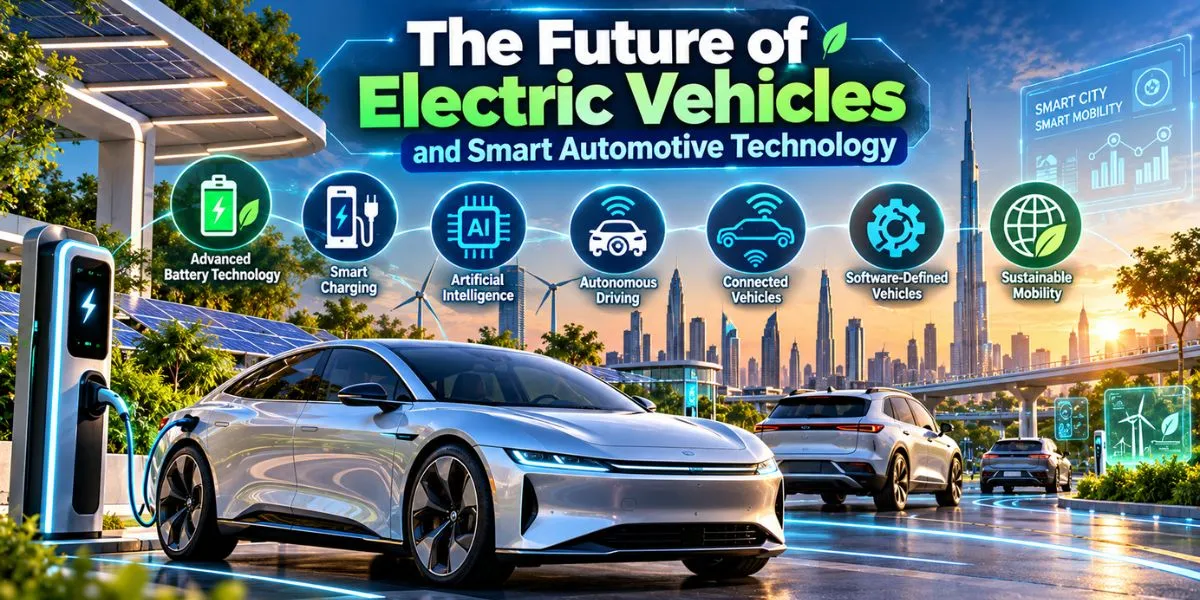
The future of electric vehicles and smart automotive technology is changing the way people think about transportation. Electric vehicles (EVs) are no longer simply alternatives to gasoline-powered cars. Instead, they are becoming increasingly connected, software-driven, intelligent, and integrated with energy systems.
At the same time, artificial intelligence, advanced batteries, smart charging, autonomous driving, and connected-car technology are transforming the modern automobile. As a result, future vehicles could become much more than transportation machines.
The International Energy Agency (IEA) reports that global electric car sales exceeded 20 million in 2025, meaning around one in four new cars sold worldwide was electric. The IEA also identifies software, AI, charging technology, and vehicle-grid integration as major areas shaping the next stage of automotive development.
Electric Vehicles Are Becoming a Major Part of the Automotive Future
Electric vehicles are at the center of the automotive industry’s transformation. Unlike conventional vehicles that use internal combustion engines, EVs rely on electric motors and rechargeable batteries.
Consequently, EVs can offer different driving characteristics, energy-use patterns, and maintenance requirements. Furthermore, their relatively simple electric drivetrains make them well suited to digital technologies and automation.
The global EV market is also becoming more diverse. According to the IEA, the number of electric car models could exceed 1,100 in 2026, giving consumers more choices across different vehicle sizes and price categories.
Therefore, the future of electric vehicles is not limited to a small group of premium models. Instead, EV technology is gradually expanding across mainstream passenger cars and other vehicle categories.
The Future of EV Battery Technology
Battery technology remains one of the most important factors influencing electric vehicles.
Modern batteries continue to improve in areas such as energy density, charging performance, durability, and manufacturing. In 2025, global EV battery deployment reached about 1.2 TWh, an increase of almost 30% compared with 2024, according to the IEA.
Solid-State and Advanced Batteries
One area receiving significant attention is solid-state battery technology. Future battery designs may offer improvements in energy density, charging performance, safety, or packaging. However, the timing and scale of widespread adoption remain uncertain.
Meanwhile, manufacturers are also improving existing lithium-ion technologies through better cell chemistry, battery-pack designs, cooling systems, and manufacturing processes.
Battery Recycling
As more EV batteries reach the end of their useful vehicle life, recycling will become increasingly important. future of electric vehicles and smart automotive technology
Battery recycling can help recover valuable materials and strengthen supply-chain resilience. The IEA expects recycling to become an increasingly important source of critical minerals as the EV battery industry expands.
Smarter and Faster EV Charging
Charging infrastructure will remain essential to the future of electric mobility.
Home charging is currently the preferred charging method for many EV owners who have access to suitable parking. However, public charging is particularly important for apartment residents, long-distance drivers, workplaces, and people without dedicated home charging.
Future charging systems are expected to become faster and more intelligent.
Ultra-Fast Charging
Higher-voltage systems, improved battery cells, and advanced power electronics are helping reduce charging times. The IEA reports that the first 1,000-volt EV models appeared in 2025, while charging announcements involving times below 10 minutes continued into 2026.
Smart Charging
Smart charging can automatically adjust when a vehicle charges. For example, a system could shift charging toward periods of lower electricity demand or favorable electricity prices.
Therefore, charging could become an intelligent energy-management process rather than simply plugging in a vehicle.
Artificial Intelligence in Electric Vehicles
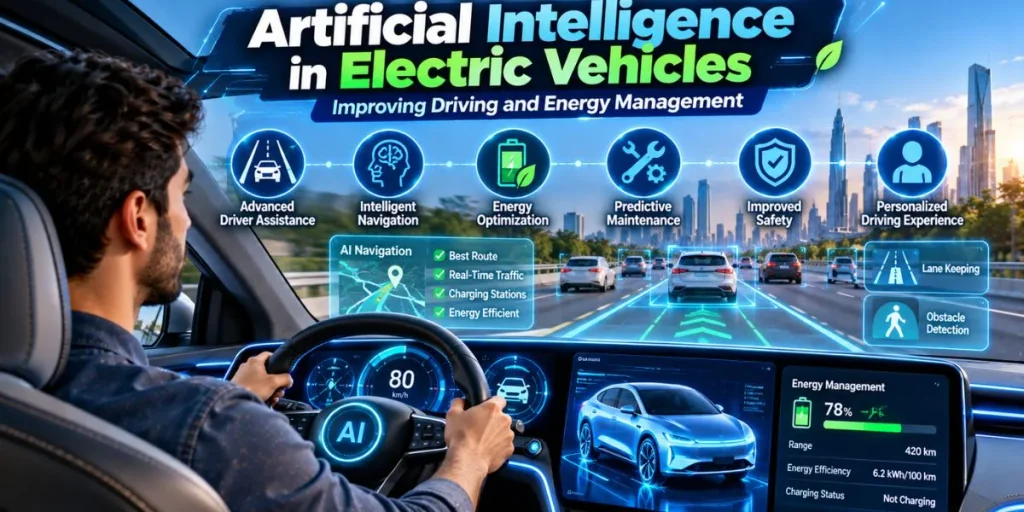
Artificial intelligence is becoming one of the most important technologies in modern vehicles.
AI systems can process information from cameras, radar, sensors, navigation systems, battery systems, and other sources. As a result, vehicles can increasingly respond to complex information in real time.
The IEA reports that advances in AI and computing power are particularly benefiting EVs in areas such as automated driving and integrated vehicle control. AI is also being used for energy management and vehicle development.
Future AI applications may include:
- Intelligent navigation
- Personalized driving settings
- Energy optimization
- Predictive maintenance
- Advanced driver assistance
- Voice-controlled vehicle systems
- Automated parking
- Driver monitoring
However, AI will not eliminate the need for human attention and responsible driving.
The Development of Autonomous Electric Vehicles
Autonomous driving is another major part of smart automotive technology.
Many modern vehicles already offer advanced driver-assistance systems (ADAS), including adaptive cruise control, lane-keeping assistance, automatic emergency braking, and parking assistance.
Beyond these systems, more advanced automated driving technologies are being developed.
The IEA reports that fully autonomous Level 5 vehicles are not currently in sight, but Level 4 electric driverless taxis are already operating commercially in more than 20 cities.
This distinction is important. Driver assistance and autonomous driving are not the same thing.
In the future, autonomous technology could become more capable. Nevertheless, safety validation, regulations, infrastructure, cybersecurity, and public acceptance will remain important factors.
Software-Defined Vehicles Are Changing Cars
One of the biggest developments in the future of automotive technology is the rise of software-defined vehicles. future of electric vehicles and smart automotive technology
A software-defined vehicle uses software and centralized computing to control an increasing share of vehicle functions. Instead of relying primarily on numerous separate electronic control units, newer architectures can consolidate functions into more powerful computing systems.
According to the IEA, battery-electric vehicles currently lead this transition, with software-defined architectures supporting over-the-air updates, improved driver assistance, battery-management improvements, and new digital features.
This means a vehicle may continue receiving improvements after purchase.
For example, future software updates could improve:
- Battery management
- Navigation
- Driver assistance
- Energy efficiency
- Entertainment
- Security
- Vehicle performance
Consequently, buying a car may increasingly resemble buying a long-term technology platform.
May You Like To Read More: How to Choose the Right Car for Your Lifestyle and Budget
Connected Cars and V2X Technology
Modern vehicles are becoming increasingly connected to smartphones, cloud platforms, navigation services, charging networks, and other infrastructure.
One important technology is vehicle-to-everything (V2X) communication.
V2X can include communication between vehicles, infrastructure, networks, and other road users. In the future, connected vehicles could receive information about traffic conditions, road hazards, congestion, or changing signals. future of electric vehicles and smart automotive technology
This connectivity could also support smarter traffic management.
For example, connected vehicles and intelligent traffic infrastructure could exchange information to help transportation systems respond more effectively to traffic patterns.
Predictive Maintenance and Smart Vehicle Diagnostics
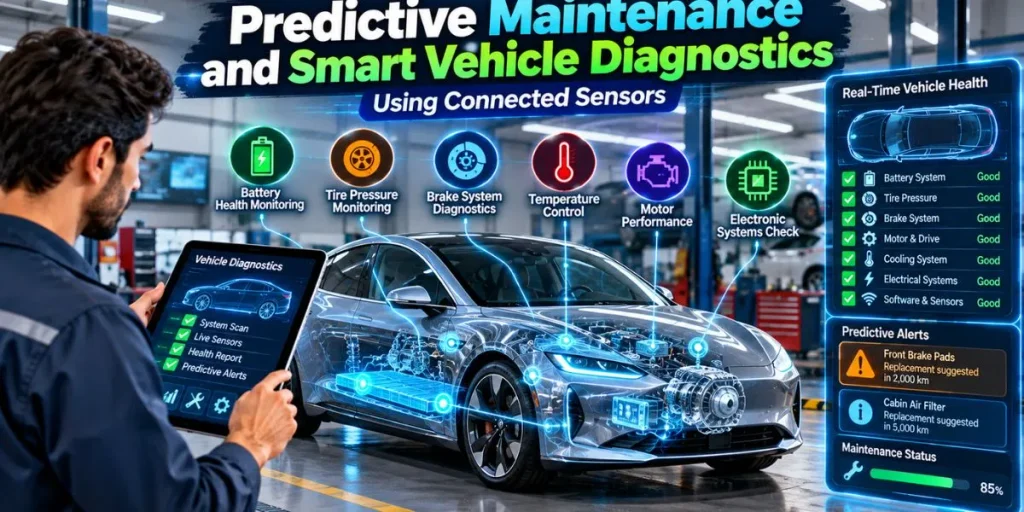
Smart automotive technology can also change vehicle maintenance.
Traditional maintenance schedules often depend on mileage or time. However, connected vehicles can continuously monitor components and operating conditions.
Predictive maintenance systems could identify unusual behavior before it develops into a major problem.
For example, sensors could monitor:
- Battery performance
- Tire condition
- Brake systems
- Cooling systems
- Electrical components
- Charging systems
Therefore, drivers could receive earlier warnings and potentially reduce unexpected breakdowns.
Electric Vehicles and Vehicle-to-Grid Technology
The future of electric vehicles may extend beyond transportation.
Vehicle-to-grid (V2G) technology allows compatible EVs to potentially send stored electricity back to the electrical grid. Similarly, vehicle-to-home systems can potentially use an EV battery to provide electricity to a home. future of electric vehicles and smart automotive technology
Smart charging and bidirectional charging could help shift electricity demand and provide flexibility to power systems. The IEA notes that V2G can help address grid constraints, although adoption still faces challenges involving compatible vehicles, regulations, standards, and infrastructure.
This creates an interesting possibility: an electric car could function as both a transportation device and a mobile energy-storage system.
Renewable Energy and Electric Mobility
Electric vehicles can also become more closely connected with renewable energy.
For example, EV owners may be able to charge vehicles when solar or wind electricity is readily available. Smart charging can help shift electricity consumption to suitable periods.
Furthermore, bidirectional charging could allow compatible vehicles to return electricity to a home or grid when needed.
As a result, future electric mobility could become increasingly connected with broader energy-management systems.
Cybersecurity Will Become Essential
As vehicles become smarter, cybersecurity becomes increasingly important.
Connected vehicles contain software, sensors, communication systems, and valuable data. Therefore, protecting these systems from unauthorized access will be essential.
Potential concerns include:
- Unauthorized vehicle access
- Data theft
- Location tracking
- Software vulnerabilities
- Charging-system attacks
- Privacy concerns
The IEA has highlighted cybersecurity as an important challenge as vehicles become more connected and autonomous. Research has also demonstrated potential vulnerabilities involving connected vehicles and EV charging infrastructure.
Consequently, secure authentication, encrypted communications, software updates, and strong privacy practices will become increasingly important.
What Are the Benefits of Smart Electric Vehicles?
The combination of electric power and smart technology could provide several potential benefits.
Greater Efficiency
AI and software can help optimize energy consumption and vehicle operation.
Better Convenience
Connected services, intelligent navigation, remote controls, and over-the-air updates can simplify vehicle ownership.
Improved Safety
Advanced driver-assistance systems can provide additional support in certain driving situations.
Predictive Maintenance
Connected sensors can help identify potential maintenance issues earlier.
Better Energy Integration
Smart charging and V2G technology could help connect EVs with electricity systems.
However, these benefits depend on technology reliability, infrastructure availability, cost, regulations, and consumer access.
Challenges Facing the Future of Electric Vehicles
Despite rapid technological progress, several challenges remain.
Charging infrastructure must continue expanding. Battery production requires critical minerals and complex supply chains. Furthermore, affordability remains important for wider EV adoption.
The electrical grid must also accommodate growing charging demand. The IEA estimates that electricity demand from EVs could exceed 1,500 TWh by 2035 under current policies, although smart charging and V2G can provide flexibility.
Additionally, cybersecurity, data privacy, software reliability, battery recycling, and regulation will require continued attention.
Therefore, the future of EVs will depend not only on technological innovation but also on how effectively these challenges are addressed.
What Will Cars Look Like in the Future?
The future car may be very different from the traditional automobile.
Instead of functioning primarily as a mechanical machine, it could combine:
- Electric power
- Artificial intelligence
- Advanced sensors
- Cloud connectivity
- Centralized computing
- Autonomous driving technology
- Smart charging
- Renewable energy integration
- Over-the-air software updates
In other words, the automobile is gradually becoming a connected digital platform.
The Future of Electric Vehicles in 2030 and Beyond
The next decade could bring significant changes to electric mobility.
More EV models are likely to become available, while charging networks and battery technologies continue to develop. Software-defined vehicles may also become more common as manufacturers increase their use of centralized computing and over-the-air updates.
At the same time, autonomous driving and AI-powered vehicle systems may continue progressing.
However, the exact pace of change is uncertain. EV adoption varies significantly between markets, and infrastructure, economics, regulations, and consumer preferences will all influence future development. The IEA’s scenarios show continued growth in EV deployment through 2035, but outcomes differ depending on policies and market conditions.
Frequently Asked Questions
What is the future of electric vehicles?
The future of electric vehicles is increasingly connected to advanced batteries, faster charging, AI, software-defined vehicles, connected services, automation, and smart energy systems.
How will AI change electric vehicles?
AI can improve energy management, driver assistance, navigation, vehicle development, predictive maintenance, and automated driving.
What are software-defined vehicles?
Software-defined vehicles are cars in which software and centralized computing control an increasing share of vehicle functions. They can support over-the-air updates and ongoing improvements.
What is vehicle-to-grid technology?
Vehicle-to-grid technology allows compatible electric vehicles to send stored electricity back to the electrical grid. It can potentially help manage electricity demand and provide additional flexibility.
Will electric cars become fully autonomous?
Fully autonomous Level 5 driving remains a longer-term possibility rather than an established current technology. However, Level 4 electric driverless taxi services are already operating commercially in some cities.
Will EV charging become faster?
Charging technology is already becoming faster, with higher-voltage systems, improved batteries, and ultra-fast chargers supporting shorter charging times. However, actual charging speed depends on both the vehicle and charging equipment.
Final Thoughts
The future of electric vehicles and smart automotive technology is about much more than replacing gasoline engines with electric motors.
The next generation of vehicles is being shaped by batteries, AI, connected systems, software, advanced driver assistance, smart charging, and renewable energy integration.
Furthermore, software-defined vehicles could allow cars to receive improvements throughout their ownership period, while predictive maintenance could make vehicle care more proactive.
At the same time, challenges involving affordability, charging infrastructure, cybersecurity, battery materials, grid capacity, and regulation still need attention.
Ultimately, the automobile is evolving from a traditional transportation machine into an increasingly intelligent and connected mobility platform. As these technologies mature, the way people drive, charge, maintain, and interact with vehicles could change significantly.
