

Choosing a car is a major decision, how to choose the right car for your lifestyle and budget especially when you want a vehicle that fits both your lifestyle and your budget. With so many sedans, SUVs, hatchbacks, crossovers, hybrids, electric vehicles, and trucks available, it can be difficult to know where to begin.
However, the right car is not necessarily the newest, largest, or most expensive option. Instead, it should meet your everyday needs while remaining affordable to own and maintain.
When you choose the right car for your lifestyle and budget, consider more than the purchase price. Fuel, insurance, maintenance, repairs, financing, parking, and depreciation can all affect the true cost of ownership. The Consumer Financial Protection Bureau recommends considering these ongoing expenses when determining how much vehicle you can comfortably afford.
1. Understand Your Driving Needs
Before looking at specific cars, think about how you actually use a vehicle.
For example, a person who mainly drives through crowded city streets may have very different needs from someone who regularly travels long distances or carries several passengers.
Consider:
- Daily commuting distance
- Number of passengers
- City or highway driving
- Parking availability
- Cargo requirements
- Family needs
- Road conditions
- Long-distance travel
- Towing or hauling requirements
Therefore, start with your lifestyle rather than a particular car brand or model.
2. Set a Realistic Car Buying Budget
Your car budget should include more than the amount you can pay upfront.
If you finance the vehicle, consider the down payment, interest rate, loan term, taxes, fees, and monthly payment. Additionally, remember ongoing expenses such as insurance, fuel, maintenance, and repairs.
The CFPB recommends calculating the overall cost of the vehicle rather than focusing only on the advertised price or monthly payment.
A simple budget can include:
Purchase price + financing + insurance + fuel + maintenance + repairs + registration and fees
This approach can help prevent you from choosing a vehicle that looks affordable initially but becomes expensive over time.
3. Calculate the Total Cost of Car Ownership
The purchase price is only one part of owning a vehicle.
Two cars with similar prices can have very different ownership costs. One may consume more fuel, require more expensive maintenance, or have higher insurance costs.
Before buying, research:
- Fuel or electricity costs
- Insurance
- Routine servicing
- Replacement tires
- Repairs
- Registration
- Financing interest
- Parking
- Depreciation
Consequently, comparing total ownership costs can give you a more realistic picture of affordability.
4. Choose the Right Car Body Style
Different body styles suit different lifestyles.
Hatchbacks
Hatchbacks can be practical for urban driving because they often combine compact dimensions with useful cargo space.
Sedans
Sedans can suit commuters and families who want a traditional passenger car with a separate trunk.
SUVs
SUVs may appeal to families or drivers who need additional passenger and cargo space.
Crossovers
Crossovers combine some characteristics of cars and SUVs and can be suitable for drivers seeking practicality without choosing a larger traditional SUV.
Pickup Trucks
Pickup trucks can make sense for drivers who regularly need cargo space, towing capability, or work-related utility.
Rather than choosing based solely on popularity, select the body style that matches your actual needs.
5. Consider Fuel Economy and Powertrain
Your driving habits should also influence your powertrain choice.
Depending on the market and vehicle, you may encounter:
- Petrol engines
- Diesel engines
- Hybrid systems
- Plug-in hybrids
- Battery-electric vehicles
If you drive long distances regularly, fuel efficiency can have a significant effect on ownership costs. On the other hand, drivers with predictable routes and convenient charging access may consider an electric vehicle.
Therefore, compare the vehicle’s efficiency, driving range, charging requirements, fuel availability, and expected operating costs before making a decision.
6. Decide Between a New and Used Car
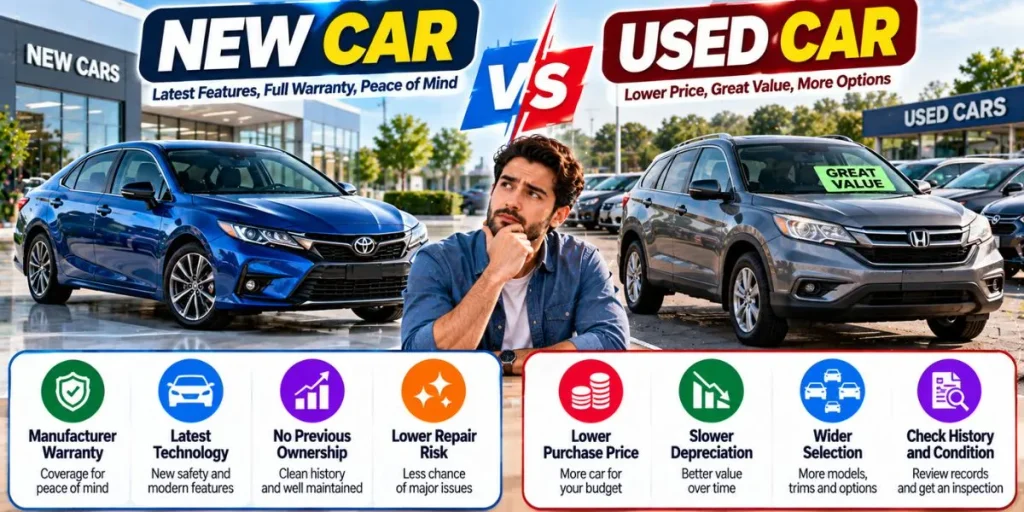
Both new and used cars can have advantages.
A new car may provide the latest technology, newer safety features, a manufacturer’s warranty, and no previous ownership history.
A used car, meanwhile, can offer a lower purchase price and may reduce the initial depreciation you experience as the owner.
If you’re buying used, research the vehicle’s service history, mileage, condition, accident history, recalls, and ownership records. An independent inspection can also provide useful information before completing the purchase.
For vehicles covered by NHTSA’s U.S. recall system, consumers can search for open safety recalls using the vehicle identification number or other available information.
7. Prioritize Vehicle Safety
Safety should be one of your most important considerations when choosing a vehicle.
Look for appropriate safety equipment and research independent safety information where available. Depending on the vehicle, useful technologies may include:
- Airbags
- Seat belts
- Anti-lock brakes
- Electronic stability control
- Tire pressure monitoring
- Forward collision warning
- Automatic emergency braking
- Lane departure warning
- Blind-spot monitoring
- Rearview cameras
NHTSA’s 5-Star Safety Ratings allow consumers to research vehicle crash-test performance and compare safety information. NHTSA also provides recall information and resources for driver-assistance technologies.
However, remember that safety technology should complement attentive driving rather than replace it.
8. Research Reliability and Maintenance Costs
A car can fit your budget at the dealership but become expensive later if maintenance and repairs are costly.
Before buying, research:
- Routine service requirements
- Warranty coverage
- Typical maintenance costs
- Parts availability
- Service-center availability
- Reliability history
- Tire and brake costs
Also, consider how easy it will be to find qualified technicians who can service the vehicle.
Ultimately, a reliable car with manageable maintenance requirements may provide better long-term value than a cheaper vehicle with frequent expensive repairs.
Read More: Essential Software Tools for Modern Workplaces
9. Choose Features You Actually Need
Modern vehicles can offer an enormous number of features. However, more features do not automatically mean a better purchase.
First, identify the features that genuinely matter to you.
Essential Features
- Effective air conditioning
- Comfortable seating
- Good visibility
- Safety equipment
- Practical storage
Helpful Features
- Parking sensors
- Smartphone connectivity
- Navigation
- Adaptive cruise control
- Driver-assistance systems
Optional Luxury Features
- Premium audio
- Panoramic roof
- Advanced interior materials
- Additional convenience technology
Therefore, prioritize features based on usefulness rather than simply choosing the longest equipment list.
10. Think About Space and Practicality
A car should fit your everyday life.
If you have children, check whether child seats fit comfortably. If you frequently travel, examine cargo capacity. Similarly, if you regularly park in tight spaces, consider the vehicle’s overall dimensions and visibility.
Before buying, sit in both the front and rear seats. Open the trunk or cargo area and imagine using the vehicle for your normal activities.
A car that looks perfect in a showroom may feel very different once you use it every day.
11. Take a Proper Test Drive
Never choose a car based solely on photographs, specifications, or online reviews.
During a test drive, evaluate:
- Seat comfort
- Visibility
- Steering
- Braking
- Acceleration
- Ride quality
- Cabin noise
- Air conditioning
- Technology
- Parking
- Rear-seat comfort
If possible, drive on roads that resemble your normal commute.
Furthermore, try entering and exiting the vehicle several times. Small details can become surprisingly important after months of ownership.
12. Compare Car Financing Options
If you need an auto loan, compare more than the monthly payment.
Look at:
- Interest rate
- APR
- Loan term
- Down payment
- Total interest
- Fees
- Trade-in value
- Total amount payable
The CFPB notes that comparing lenders and loan terms can help consumers understand the total cost of borrowing.
You should also consider whether buying or leasing better matches your circumstances. Leasing and financing have different costs, obligations, and ownership structures, so compare the total financial commitment rather than focusing on one monthly figure.
13. Consider Resale Value and Depreciation
Even if you plan to keep your car for several years, resale value can still matter.
Factors that can influence future value include:
- Vehicle condition
- Mileage
- Brand reputation
- Market demand
- Maintenance history
- Accident history
- Vehicle age
Consequently, keeping service records and maintaining the vehicle properly can help preserve its condition.
14. Think About Your Future Needs
Your needs may change after you purchase a vehicle.
Perhaps your family will grow, your commute will become longer, or you may need additional cargo space in the future.
Therefore, ask yourself where your lifestyle could be in the next few years.
Buying a vehicle that only fits your current situation may result in another purchase sooner than expected.
15. Create a Shortlist of Two or Three Cars
After researching your needs, create a shortlist of two or three vehicles.
Compare them using the same criteria:
| Factor | Car 1 | Car 2 | Car 3 |
|---|---|---|---|
| Purchase price | |||
| Fuel economy | |||
| Safety | |||
| Insurance | |||
| Maintenance | |||
| Warranty | |||
| Space | |||
| Features | |||
| Resale value | |||
| Ownership cost |
This makes comparison easier and can help you avoid making an emotional decision at the dealership.
Common Car-Buying Mistakes to Avoid
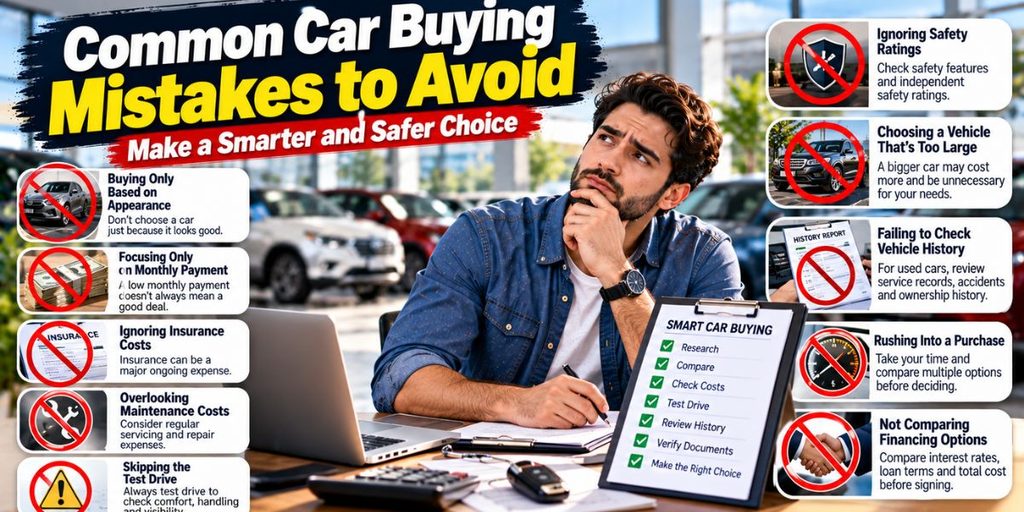
When choosing a vehicle, avoid these common mistakes:
- Buying based only on appearance
- Focusing only on the monthly payment
- Ignoring insurance and maintenance costs
- Skipping the test drive
- Ignoring safety ratings
- Choosing a vehicle that is larger than necessary
- Forgetting future lifestyle needs
- Failing to inspect a used vehicle
- Ignoring recalls
- Rushing into a purchase
Instead, take your time and compare the complete ownership picture.
Complete Car-Buying Checklist
Before making your final decision, make sure you have:
- Defined your driving needs
- Set a realistic budget
- Calculated ownership costs
- Chosen a suitable body style
- Compared powertrains
- Researched safety
- Checked reliability
- Compared insurance
- Investigated maintenance costs
- Compared financing
- Test-driven your shortlist
- Checked recalls
- Reviewed warranty coverage
- Considered resale value
Frequently Asked Questions
How do I choose the right car for my lifestyle?
Start by considering your daily driving, passengers, cargo needs, road conditions, parking situation, and future requirements. Then compare vehicles that match those needs and fit your overall budget.
How much should I spend on a car?
There is no single amount that works for everyone. Consider your income, existing expenses, savings, financing costs, insurance, fuel, maintenance, and other ownership expenses before deciding.
Should I buy a new or used car?
A new car can offer newer technology and warranty coverage, while a used car may have a lower purchase price. Compare the complete costs and condition of the specific vehicles you’re considering.
Should I buy an SUV or sedan?
It depends on your needs. An SUV may provide additional passenger or cargo space, while a sedan may be better suited to someone who wants a smaller traditional passenger vehicle.
What should I check during a test drive?
Check comfort, visibility, steering, braking, acceleration, ride quality, noise, air conditioning, technology, and overall drivability.
How do I calculate the total cost of owning a car?
Consider the purchase price or financing, interest, insurance, fuel or electricity, maintenance, repairs, registration, parking, and depreciation.
Final Thoughts
Learning how to choose the right car for your lifestyle and budget becomes much easier when you look beyond the sticker price.
Start by understanding how you drive and what you actually need. Then create a realistic budget, compare total ownership costs, research safety and reliability, and evaluate new and used options carefully.
Most importantly, take your shortlisted vehicles for a proper test drive and compare financing, maintenance, insurance, and long-term value.
The right car is ultimately one that meets your practical needs, provides the features and safety you value, and remains financially comfortable to own.
