

Traveling hidden destinations around the world does not have to mean spending a fortune. In fact, with thoughtful planning, flexible choices, and a little creativity, you can enjoy memorable journeys without putting unnecessary pressure on your wallet. Learning how to travel smartly on a limited budget is mainly about making better decisions before and during your trip.
Whether you are planning a weekend getaway, an international vacation, a family trip, or a long backpacking adventure, your budget can go much further when you know where to save and where to spend. Instead of cutting every expense, the goal is to spend intentionally on the experiences that matter most.
Moreover, budget travel does not necessarily mean sacrificing comfort. Affordable accommodation, local restaurants, public transportation, free attractions, and flexible travel dates can help you experience more while spending less.
So, if you want to discover how to travel on a budget without missing out, these practical tips can help you plan a smarter and more affordable journey.
1. Create a Realistic Travel Budget
The first step toward smart budget travel is knowing exactly how much you can afford to spend.
Before booking anything, determine your total travel budget. Then divide it into major categories such as:
- Flights or other transportation
- Accommodation
- Food and drinks
- Local transportation
- Activities and attractions
- Shopping
- Travel insurance
- Emergency expenses
For example, if you have a $1,500 budget for a seven-day trip, do not think of the entire amount as money available for hotels and sightseeing. Instead, reserve a portion for emergencies and unexpected expenses.
A realistic budget also gives you a daily spending target. You can adjust that target depending on your itinerary and priorities.
2. Choose an Affordable Destination
Your destination can have a huge effect on the overall cost of your trip.
Therefore, instead of deciding where to go first and trying to make the budget work afterward, compare several destinations before making a final decision.
Consider:
- Accommodation prices
- Food costs
- Transportation expenses
- Attraction fees
- Currency exchange rates
- Local cost of living
- Seasonal price changes
Sometimes, a destination that seems expensive at first can become affordable during its shoulder season. Likewise, a lesser-known destination may provide similar scenery or cultural experiences for considerably less money.
If you enjoy discovering unusual places, exploring lesser-known destinations can also give you memorable experiences while helping you avoid some of the costs associated with heavily visited tourist hotspots.
3. Travel During the Shoulder or Off-Season
Timing can make a significant difference to your travel budget.
Peak travel periods often bring higher prices because demand for flights, hotels, tours, and attractions increases. By contrast, shoulder-season travel can sometimes offer a useful balance between reasonable weather, smaller crowds, and lower prices.
For example, traveling shortly before or after a destination’s busiest season may allow you to find better accommodation rates.
However, always research local weather and seasonal conditions before booking. The cheapest month is not necessarily the best month if attractions are closed or transportation is limited.
Current budget-travel guidance also highlights shoulder-season travel as a useful way to reduce costs while avoiding some peak-season crowds.
Read More: Exploring Hidden Destinations Around the World
4. Be Flexible With Your Travel Dates
If your schedule allows it, flexibility can become one of your biggest money-saving tools.
Instead of choosing a specific departure date immediately, compare several nearby dates. A flight or hotel can sometimes cost noticeably less simply because you travel a day earlier or later.
Consider comparing:
- Weekday and weekend departures
- Morning and evening flights
- Different return dates
- Nearby airports
- Different travel months
- Shorter or longer stays
However, always compare the total cost. A cheaper flight from a distant airport may become more expensive after transportation, parking, baggage, and other costs are included.
5. Compare Flights Before Booking

Finding cheap flights is an important part of learning how to travel smartly on a limited budget.
Use several flight-search tools to compare prices, routes, dates, and airlines. However, do not automatically choose the lowest advertised fare.
Instead, check the complete price.
Look for:
- Checked-bag charges
- Carry-on restrictions
- Seat-selection fees
- Airport location
- Change and cancellation policies
- Connection times
- Transportation to and from the airport
A low headline fare may not remain inexpensive after additional charges are added.
Therefore, compare the final cost, not just the initial ticket price.
6. Consider Trains and Buses
Flying is not always the cheapest way to travel, especially when your destination is relatively close.
Depending on the country, trains and long-distance buses can provide affordable alternatives. They may also help you avoid airport transfers, parking charges, and some baggage complications.
Public transportation can be particularly useful when traveling between cities or exploring regions with reliable rail and bus networks. Recent budget-travel guidance continues to recommend public transportation as a way to reduce transportation expenses.
Additionally, traveling by train or bus can turn transportation itself into part of the experience.
7. Choose Affordable Accommodation
Accommodation can consume a large portion of a travel budget. Therefore, compare more than just traditional hotels.
Depending on your destination and travel style, consider:
- Budget hotels
- Hostels
- Guesthouses
- Homestays
- Vacation rentals
- Family-run accommodations
However, do not choose accommodation based only on the lowest nightly price.
A cheap hotel located far from everything may cost more once you add daily transportation. A slightly more expensive property near public transportation, restaurants, and attractions may actually provide better overall value.
In other words, consider cost per trip, not simply cost per night.
8. Look for Accommodation With Extra Value
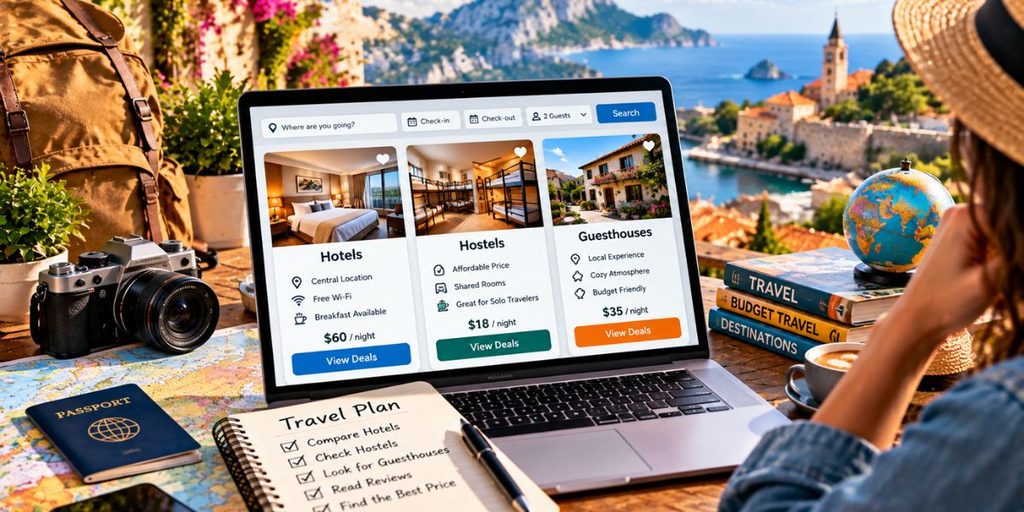
Sometimes, the best budget accommodation is not the cheapest room. Instead, it is the property that includes useful extras.
For example, look for:
- Free breakfast
- Free Wi-Fi
- Kitchen facilities
- Laundry access
- Free parking
- Airport transfers
- Public transportation nearby
A complimentary breakfast can reduce food expenses. Likewise, a kitchen can allow you to prepare some meals rather than eating out every day.
Longer stays may also provide better rates at some properties, although discounts and policies vary by provider.
9. Pack Light to Avoid Extra Fees
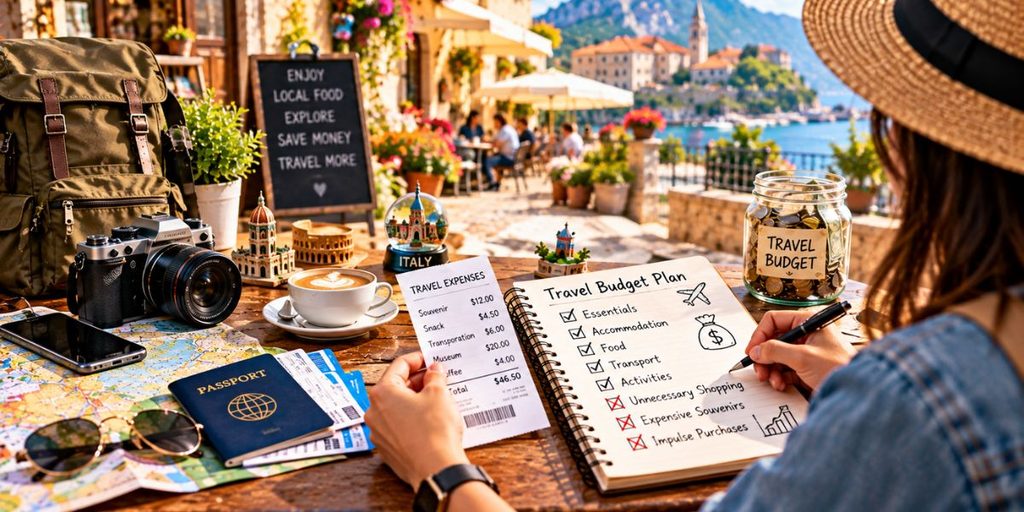
Packing light can make your journey cheaper and easier.
Many travelers pack far more than they actually need. As a result, they may pay baggage fees, wait longer at airports, or struggle with heavy luggage.
Instead, choose versatile clothing that can be combined in several ways. If your accommodation provides laundry facilities, you can pack even less.
Before traveling, check your airline’s current baggage rules because allowances vary between airlines and ticket types.
A recent budget-travel guide from Lonely Planet also recommends making better use of carry-on luggage to avoid checked-bag costs.
10. Eat Like a Local
Food is another area where travelers can save without sacrificing enjoyment.
Rather than eating every meal at restaurants located directly beside major tourist attractions, explore local neighborhoods.
Try:
- Local markets
- Family-run restaurants
- Bakeries
- Street-food vendors
- Local cafés
- Supermarkets
Eating locally can also give you a more authentic connection with the destination.
However, remember that food safety should come first. Choose establishments that appear clean and busy, and take local health conditions into account.
11. Use Public Transportation
Taxis, rideshares, and rental cars can quickly increase your travel expenses.
Whenever practical, use:
- Buses
- Metro systems
- Trams
- Trains
- Shared transportation
- Walking
Before arriving, research how the local transportation system works. Some destinations offer daily or multi-day passes, although you should calculate whether a pass actually saves money based on your itinerary.
Public transportation can also give you a different perspective on everyday local life.
12. Walk Whenever Practical
Walking is one of the simplest ways to save money while traveling.
If two attractions are reasonably close, consider walking instead of taking a taxi. You will save money while potentially discovering cafés, markets, historic streets, parks, and neighborhoods that you might otherwise miss.
Nevertheless, do not walk simply to save money if the route is unsafe, extremely long, or unsuitable for the weather.
Smart budget travel means making sensible choices, not making every choice the cheapest possible one.
13. Find Free Things to Do
You do not need to pay for an attraction every time you want to enjoy a destination.
Many places offer free experiences such as:
- Public parks
- Beaches
- Historic neighborhoods
- Scenic viewpoints
- Walking routes
- Local markets
- Cultural festivals
- Free museum days
- Public gardens
- Religious and architectural landmarks
Before your trip, search for free attractions and events in your destination.
Furthermore, some cities offer free walking tours or community events. While some tours operate on tips, always understand the pricing structure before participating.
14. Choose Paid Attractions Carefully
Budget travel does not mean avoiding every paid experience.
Instead, decide which activities are genuinely important to you.
For example, you might choose one special guided tour, museum, boat trip, or cultural experience while enjoying free attractions on other days.
This approach allows you to spend money on memorable experiences instead of paying for everything simply because it is popular.
A useful question is:
“Would I regret missing this experience?”
If the answer is yes, it may deserve a place in your budget.
15. Book Important Expenses Strategically
Planning ahead can give you more opportunities to compare prices and adjust your itinerary.
Flights, accommodation, trains, and popular activities may have limited availability, especially during busy travel periods.
However, booking early does not mean blindly paying for the first option you find.
Compare:
- Final prices
- Cancellation terms
- Refund policies
- Baggage rules
- Taxes
- Location
- Included services
Recent travel-planning guidance emphasizes researching multiple options and comparing what is actually included in the quoted price.
16. Watch Out for Hidden Travel Fees
A travel deal is only a good deal if you understand the complete cost.
Before paying, look for:
- Resort fees
- Taxes
- Cleaning fees
- Booking charges
- Baggage fees
- Seat fees
- Currency-conversion charges
- Airport transfer costs
- Cancellation fees
For short-term lodging in the United States, the Federal Trade Commission’s rule requires sellers to disclose required fees upfront, while taxes or other charges that cannot be calculated in advance may still need to be disclosed before final payment.
Regardless of where you travel, reading the final price and booking conditions carefully is a smart habit.
17. Set a Daily Travel Spending Limit
Once you know your total budget, create a daily spending target.
A simple formula is:
Available daily spending budget = usable trip budget ÷ number of travel days
For example, if you have $1,000 available for seven days after paying for your flights and accommodation, you have approximately $143 per day for food, transportation, activities, and other expenses.
You do not have to spend exactly the same amount every day.
You might spend less on a sightseeing day and more on a special excursion the following day.
The important thing is to understand your overall limit.
18. Track Your Expenses While Traveling
Even careful travelers can lose track of small purchases.
A coffee here, a taxi there, a souvenir, and an extra snack can gradually turn into a significant amount.
Therefore, track your spending daily.
You can use:
- A smartphone notes app
- A spreadsheet
- A budgeting application
- A simple travel notebook
- Banking notifications
At the end of each day, spend a few minutes checking your expenses.
If you are overspending, you can adjust your plans before the problem becomes serious.
19. Use Travel Apps and Offline Maps
Technology can help make budget travel easier.
Useful travel apps can help with:
- Flight comparisons
- Hotel searches
- Public transportation
- Navigation
- Currency conversion
- Translation
- Expense tracking
- Restaurant discovery
Download important maps before leaving Wi-Fi access whenever possible. Offline maps can reduce your dependence on mobile data while helping you navigate unfamiliar areas.
However, do not install an app or purchase a service simply because it promises a “special travel deal.” Research the company first.
20. Avoid Impulse Purchases
Shopping can quietly destroy a carefully planned travel budget.
Before buying something, ask yourself whether you genuinely want or need it.
Common impulse expenses include:
- Souvenirs
- Snacks
- Unnecessary upgrades
- Tourist-shop purchases
- Expensive convenience items
Setting a separate shopping budget can help.
That way, you can enjoy buying something special without accidentally spending money that was reserved for transportation, food, or activities.
21. Share Costs When It Makes Sense
Traveling with friends or family can sometimes reduce certain expenses.
For example, travelers may be able to share:
- Accommodation
- Car rentals
- Airport transfers
- Private transportation
- Vacation rentals
However, compare the numbers rather than assuming group travel is automatically cheaper.
If sharing accommodation requires a larger room or additional transportation, the total savings may be smaller than expected.
22. Consider Longer Stays
Sometimes, staying longer can reduce the average daily cost of a trip.
Some accommodation providers offer lower rates for longer stays. In addition, staying in one place for longer can reduce the number of:
- Flights
- Train journeys
- Airport transfers
- Hotel check-ins
- Restaurant meals caused by constant moving
Slow travel can therefore be both relaxing and financially practical.
Instead of visiting five destinations in five days, consider spending several days in one location and getting to know it properly.
23. Prioritize Experiences Over Luxury
One of the smartest principles of budget travel is learning where your money creates the most value.
You may not need a luxury hotel if you plan to spend most of the day exploring.
Likewise, you may prefer an affordable room and use the savings for a special local meal, cultural experience, or memorable excursion.
The goal is not simply to spend less.
The goal is to spend better.
When you prioritize experiences that genuinely matter to you, a limited budget can still produce an incredibly rewarding journey.
24. Avoid Common Budget Travel Mistakes
Even experienced travelers can make expensive mistakes.
Here are some common ones to avoid:
- Choosing a hotel based only on its lowest price
- Ignoring baggage fees
- Eating exclusively in tourist areas
- Taking taxis everywhere
- Booking without reading cancellation policies
- Forgetting emergency funds
- Buying unnecessary upgrades
- Failing to compare total prices
- Overpacking
- Trying to visit too many destinations
- Trusting suspiciously cheap travel offers
Travel scams are another important consideration. The FTC advises travelers to research companies, check reviews and complaints, obtain specific details before paying, and be cautious when an offer pressures them to act immediately. It also warns against travel offers that demand payment through methods such as wire transfers, gift cards, or cryptocurrency.
25. Create Your Own Smart Budget Travel Strategy
Ultimately, learning how to travel smartly on a limited budget is about creating a strategy that fits your priorities.
A simple approach is:
Choose wisely → Compare prices → Plan ahead → Travel flexibly → Spend intentionally → Track expenses → Keep an emergency fund
You do not need to follow every budget travel trick available.
Instead, identify the areas where you can save the most without reducing the quality of your trip.
For one traveler, that might mean choosing public transportation. For another, it could mean traveling during shoulder season. Someone else might save the most by choosing affordable accommodation or cooking several meals.
The best strategy is the one that works for your destination, schedule, and personal priorities.
Smart Budget Travel Checklist
Before leaving home, use this quick checklist:
- Set a total travel budget
- Research destination costs
- Compare several travel dates
- Check flight prices
- Compare alternative transportation
- Research affordable accommodation
- Check the property’s location
- Read cancellation policies
- Check baggage allowances
- Plan your food budget
- Research public transportation
- Find free attractions
- Choose your priority paid experiences
- Set a daily spending limit
- Keep an emergency fund
- Download useful travel apps
- Save offline maps
- Research travel scams
- Check the final price before paying
Frequently Asked Questions About Budget Travel
How can I travel smartly on a limited budget?
Start by creating a realistic budget, choosing an affordable destination, comparing transportation and accommodation, traveling during less expensive periods, and tracking your spending. Most importantly, prioritize experiences that matter to you rather than spending money on unnecessary luxuries.
What is the best way to plan a budget-friendly trip?
Begin several weeks or months before your journey when possible. Research destinations, compare travel dates, estimate daily expenses, check transportation options, and compare the complete cost of accommodation and flights before booking.
How can I save money on flights?
Compare multiple dates, airlines, airports, and routes. Also, check baggage and seat fees before deciding which flight is actually cheapest. A slightly higher base fare can sometimes have a lower total cost.
How can I save money on accommodation?
Compare hotels, hostels, guesthouses, homestays, and vacation rentals. Also consider location, included breakfast, kitchen access, laundry, Wi-Fi, and transportation costs. The cheapest room is not always the cheapest overall option.
Is traveling during the off-season cheaper?
It can be. Prices for flights, accommodation, and activities may be lower when demand decreases. However, research the destination first because weather, transportation schedules, and attraction availability can vary by season.
How can I save money on food while traveling?
Eat at local restaurants and markets instead of relying exclusively on tourist areas. You can also choose accommodation with a kitchen or included breakfast. However, always consider food safety and local health guidance.
Is public transportation cheaper than taxis?
It often can be, particularly in cities with extensive bus, train, metro, or tram systems. Nevertheless, compare the actual fares and convenience for your specific destination.
How much money should I budget for a trip?
There is no universal amount because travel costs vary by destination, trip length, accommodation, transportation, and activities. Calculate your expected expenses first, then add an emergency reserve rather than relying on a generic daily figure.
Can I travel internationally on a small budget?
Yes. International budget travel is possible when you choose destinations carefully, compare transportation, control accommodation and food costs, travel during suitable seasons, and avoid unnecessary expenses. Your destination and travel dates can have a major impact on the final cost.
Final Thoughts
Learning how to travel smartly on a limited budget does not mean removing all comfort and enjoyment from your trip. Instead, it means understanding where your money goes and making thoughtful choices.
Start by creating a realistic budget. Then, choose a destination that fits your finances, compare travel dates, look carefully at the total cost of flights and accommodation, and use affordable transportation whenever practical.
Furthermore, eat locally, pack light, search for free activities, and track your spending throughout the journey. Most importantly, do not focus exclusively on finding the absolute cheapest option. Focus on finding the best value for your money.
A limited budget can actually encourage you to travel more intentionally. You may discover quieter neighborhoods, family-run restaurants, public parks, local markets, scenic walking routes, and authentic experiences that you might otherwise overlook.
In the end, a memorable journey is not necessarily the one where you spend the most money. It is the one where you make meaningful memories while staying within your means.
Travel smart, spend wisely, and make every journey count.
Travel Disclaimer
Travel costs, transportation fares, accommodation prices, entry requirements, and local conditions can change. Always verify current prices, booking terms, travel requirements, and safety information with relevant official sources before making travel arrangements.
