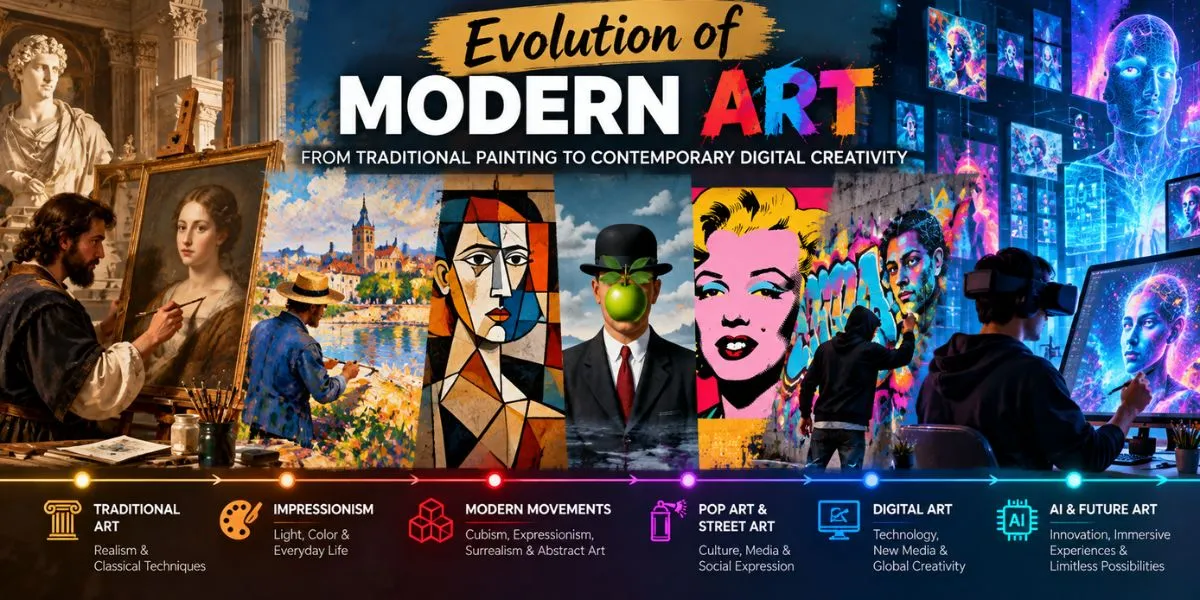
Art has always reflected the world around us. As society, technology, culture, and human ideas have changed, artists have also found new ways to express themselves. The evolution of modern art is therefore more than a history of paintings and sculptures. It is a story of experimentation, creativity, social change, and the constant search for new forms of expression.
From Impressionism and Cubism to digital art and artificial intelligence, artists have repeatedly challenged traditional ideas about what art can be. Moreover, today’s creative world continues to expand those boundaries through technology, immersive experiences, social media, and new digital tools.
In this article, we will explore the major stages of modern art, important artistic movements, the influence of technology, and how creativity continues to evolve today.
What Is Modern Art?
Modern art generally refers to a broad period of artistic development associated with artists who challenged traditional academic approaches and experimented with new forms, techniques, subjects, and ideas.
Rather than simply reproducing reality, modern artists often explored emotion, abstraction, movement, perception, and personal experience. Consequently, experimentation became an important part of artistic practice.
Modern art is also closely associated with changes in society, industry, science, photography, and urban life. MoMA highlights experimentation, expression, technology, and exchanges as important ways of understanding modern art.
How Did Modern Art Begin?
The foundations of modern art developed during a period of significant social and technological change in the late nineteenth and early twentieth centuries.
Industrialization transformed cities and everyday life. At the same time, photography challenged traditional ideas about realistic representation. Artists increasingly began looking for alternatives to established artistic conventions.
As a result, they experimented with brighter colors, unusual perspectives, simplified forms, and new subjects. This gradual shift created the foundation for many influential modern art movements.
Major Movements in the Evolution of Modern Art
The evolution of modern art cannot be understood through one style. Instead, it developed through numerous movements that each introduced different ideas.
Impressionism
Impressionism emphasized light, color, atmosphere, and everyday scenes. Artists attempted to capture the feeling of a particular moment rather than create perfectly detailed representations.
This approach helped encourage greater artistic freedom and influenced many movements that followed.
Post-Impressionism
Post-Impressionist artists pushed experimentation even further. Artists such as Vincent van Gogh, Paul Cézanne, and Paul Gauguin explored expressive color, structure, emotion, and personal interpretation.
Their work helped establish ideas that later influenced abstraction and other modern movements.
Cubism
Cubism radically changed how artists represented objects and space. Instead of showing a subject from one traditional viewpoint, Cubist artists fragmented forms and presented multiple perspectives.
Pablo Picasso and Georges Braque became central figures in this movement. Consequently, Cubism helped demonstrate that art did not have to reproduce the world exactly as people saw it.
Expressionism
Expressionism focused strongly on emotion and personal experience. Artists often used distorted forms, dramatic colors, and energetic compositions to communicate psychological or emotional states.
Therefore, the movement showed how visual art could communicate feelings rather than simply depict physical reality.
Surrealism
Surrealism explored dreams, imagination, subconscious thoughts, and unexpected combinations of objects.
Instead of following ordinary logic, Surrealist artists created unusual visual experiences that encouraged viewers to think differently about reality and imagination.
Abstract Art
Abstract artists moved even further away from traditional representation. Instead of recognizable objects, they focused on elements such as color, shape, line, texture, and composition.
As a result, viewers were encouraged to interpret artwork through personal experience rather than simply identify what was being represented.
Pop Art and Later Movements
Pop Art brought everyday consumer culture, advertising, celebrities, comics, and mass media into artistic practice.
Later movements, including Minimalism, Conceptual Art, performance art, and installation art, continued to challenge conventional definitions of artistic creation.
How Technology Changed Modern Art
Technology has played an important role in the evolution of modern art.
Photography changed visual representation, while film and video introduced new ways to tell stories. Later, computers and digital tools opened additional possibilities for creating and manipulating images.
Today, artists can combine painting, photography, animation, sound, video, programming, and interactive elements within a single project.
Therefore, technology has not simply created new tools. It has also expanded the definition of artistic expression.
The Rise of Digital Art
Digital art has become an important part of today’s creative world.
Artists can now use computers, tablets, 3D software, animation programs, and other digital tools to create artwork. Digital platforms also allow artists to share their work with global audiences without relying exclusively on traditional galleries.
Furthermore, interactive and immersive digital installations can allow audiences to participate in artistic experiences rather than simply observe them.
This shift demonstrates how the evolution of modern art continues alongside technological development.
Artificial Intelligence and the Future of Art
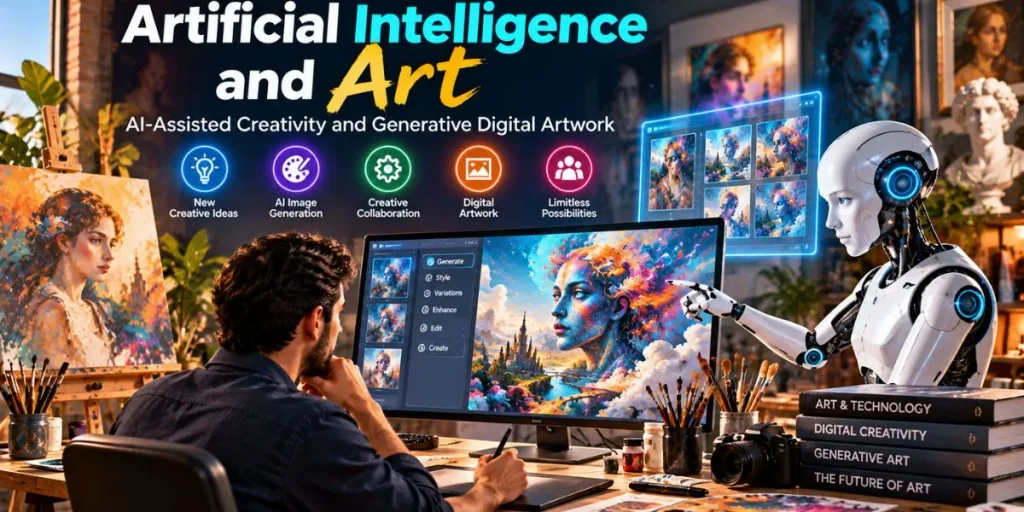
Artificial intelligence is introducing another major change to the creative landscape.
AI tools can generate images, assist with creative concepts, transform existing visual material, and support experimentation. Consequently, artists are exploring new relationships between human creativity and machine-generated output.
However, AI art also raises important questions about authorship, copyright, originality, training data, and the role of human creativity.
Rather than viewing AI as a simple replacement for artists, it can be understood as another emerging tool whose creative and ethical implications are still developing.
How Modern Art Reflects Society and Culture
Art often responds to the world in which it is created.
Modern and contemporary artists may explore subjects such as identity, technology, inequality, migration, environmental concerns, politics, popular culture, and social change.
Because of this, art can provide audiences with different perspectives on important issues.
Moreover, artists from different cultures and backgrounds continue to broaden the creative world by introducing new experiences, traditions, techniques, and viewpoints.
Read More: Smart Investment Strategies for Real Estate Beginners
Social Media and the Modern Art World
Social media has also transformed how artists connect with audiences.
Platforms such as Instagram, TikTok, and other digital communities allow artists to showcase their work, develop audiences, communicate directly with followers, and discover other creators.
Previously, artists often depended heavily on galleries, exhibitions, and traditional art institutions for exposure. Today, however, digital platforms can provide additional routes for discovery.
As a result, the relationship between artists, audiences, galleries, and collectors continues to change.
Modern Art vs. Contemporary Art
Modern art and contemporary art are related, but they are not identical terms.
Modern art is generally associated with historical movements that developed from the late nineteenth century through much of the twentieth century.
Contemporary art, on the other hand, generally refers to more recent and current artistic practices. Contemporary artists often work across painting, sculpture, photography, video, installation, performance, digital media, and other forms.
Therefore, understanding the difference can help readers place different artists and movements within their historical context.
Why Modern Art Still Matters Today
Modern art remains important because it encourages experimentation and challenges people to reconsider familiar ideas.
It can help viewers explore:
- Creativity
- Individual expression
- Cultural change
- Social issues
- New technologies
- Different perspectives
- Human emotions
Most importantly, modern art demonstrates that creativity does not have to remain fixed. Artists can question established ideas and develop new approaches as society changes.
The Future of Modern Art
The future of art is likely to become even more connected to technology and interdisciplinary creativity.
Artificial intelligence, virtual reality, augmented reality, interactive installations, generative art, digital environments, and immersive exhibitions may continue expanding the possibilities available to artists.
At the same time, traditional painting, sculpture, photography, drawing, and other established forms will continue to provide important foundations for creative expression.
Ultimately, the future of art may not be about choosing between traditional and digital approaches. Instead, artists may increasingly combine different tools and techniques to create experiences that cross traditional boundaries.
Frequently Asked Questions
What is the evolution of modern art?
The evolution of modern art describes how artistic practices changed from traditional approaches toward experimentation, abstraction, new media, technology, and diverse forms of creative expression.
What are the major modern art movements?
Major movements include Impressionism, Post-Impressionism, Fauvism, Cubism, Expressionism, Dada, Surrealism, Abstract Art, Abstract Expressionism, Pop Art, Minimalism, and Conceptual Art.
How did technology influence modern art?
Technology introduced new tools and media, including photography, film, video, computers, digital art, interactive installations, virtual reality, and artificial intelligence.
What is the difference between modern and contemporary art?
Modern art generally refers to historical artistic developments associated with the late nineteenth and twentieth centuries, while contemporary art generally describes more recent and current artistic practices.
Is AI changing the art world?
Yes. AI is creating new possibilities for image generation, experimentation, creative assistance, and interactive experiences. However, it also raises questions about authorship, copyright, originality, and artistic ethics.
Final Thoughts
The evolution of modern art is a continuing story of creativity, experimentation, and change. From Impressionist brushstrokes and Cubist geometry to digital artwork and AI-assisted creativity, artists have continually explored new ways to understand and represent the world.
Moreover, today’s creative environment shows that art can exist across many forms, technologies, cultures, and communities.
As technology continues to develop, artists will likely discover even more ways to combine traditional techniques with emerging tools. Nevertheless, the central purpose remains familiar: to express ideas, explore human experiences, challenge assumptions, and give people new ways to see the world.
