
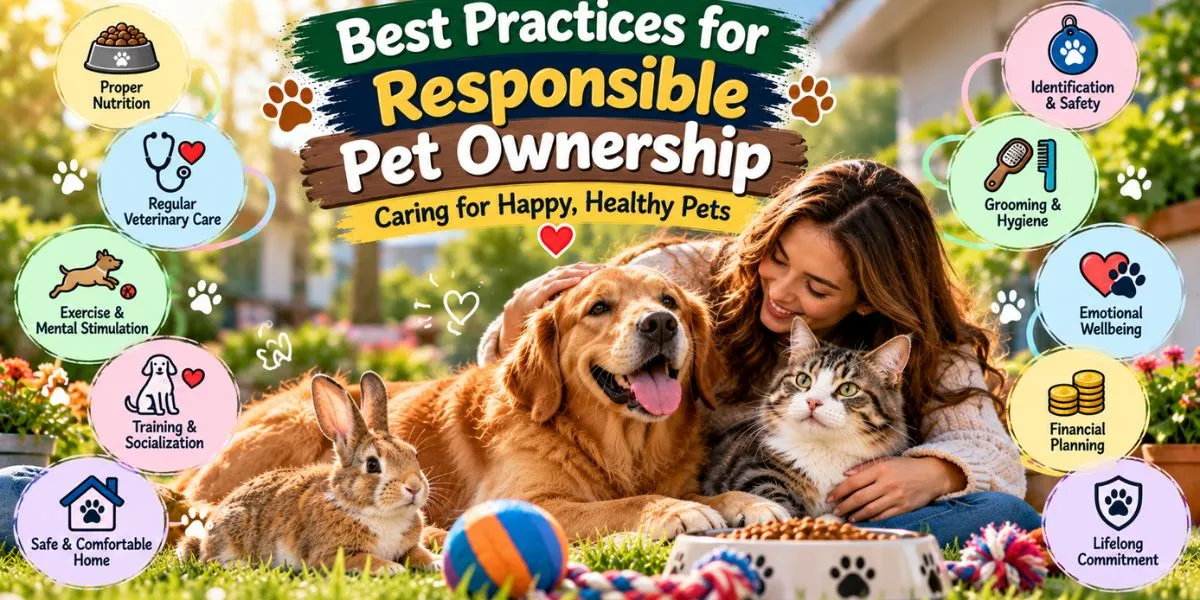
Owning responsible pet ownership a pet is one of life’s most rewarding experiences. However, responsible pet ownership involves much more than providing food and shelter. It means understanding your pet’s physical, emotional, behavioral, and social needs and making a long-term commitment to their wellbeing.
Whether you have a dog, cat, rabbit, bird, or another companion animal, your responsibilities begin before bringing the pet home and continue throughout its entire life. Therefore, responsible pet ownership requires preparation, patience, regular healthcare, proper nutrition, exercise, training, safety, and plenty of companionship.
Fortunately, becoming a responsible pet owner does not have to be complicated. By following a consistent routine and learning what your individual pet needs, you can create a healthier, safer, and happier life together.
This guide explains the best practices for responsible pet ownership, from choosing the right pet and providing proper nutrition to veterinary care, training, emergency preparation, and lifelong commitment.
What Does Responsible Pet Ownership Mean?
Responsible pet ownership means consistently meeting an animal’s needs while protecting its health, safety, comfort, and quality of life.
In practical terms, responsible pet care includes providing nutritious, species-appropriate food, clean water, veterinary care, exercise, grooming, training, social interaction, identification, and a safe living environment. The ASPCA identifies many of these areas as important components of responsible care.
Moreover, responsible ownership means recognizing that pets depend on people for essential aspects of their lives. They cannot schedule their own veterinary appointments, purchase appropriate food, or make their homes safe.
Responsible Pet Ownership Is a Lifelong Commitment
Before adopting or purchasing a pet, consider whether you can meet its needs throughout its life.
For example, a young puppy may require frequent training, socialization, exercise, and supervision. Later, the same dog may need different nutrition, activity levels, and healthcare as it becomes an adult or senior.
Similarly, cats may appear independent, but they still require appropriate nutrition, veterinary care, environmental enrichment, identification, and companionship.
Therefore, responsible pet ownership means preparing for changing needs rather than focusing only on the first few months.
1. Choose the Right Pet for Your Lifestyle
One of the first responsibilities of a pet owner is choosing an animal that fits your lifestyle, resources, and living environment.
Before bringing a pet home, ask yourself some practical questions.
- How much time can I dedicate to daily care?
- Does my home provide enough space?
- Can I afford routine and unexpected veterinary expenses?
- How much exercise will the pet need?
- Will the animal be comfortable around children or other pets?
- Can I provide appropriate mental stimulation?
- What will happen to the pet when I travel?
Additionally, research the typical needs of the species, breed, age, and individual animal you are considering.
For instance, some dogs need substantial daily exercise, while others may be comfortable with less intense activity. Likewise, some cats may thrive in busy homes, whereas others prefer quiet environments.
Most importantly, avoid choosing a pet based only on appearance or temporary excitement.
2. Provide Proper Nutrition and Fresh Water

Nutrition is a fundamental part of responsible pet ownership. A suitable diet provides the nutrients your pet needs for growth, maintenance, energy, and overall health.
Choose food appropriate for your pet’s species, age, lifestyle, and health requirements. Furthermore, portion sizes should be appropriate rather than based simply on how much your pet wants to eat.
Fresh, clean water should also be available as appropriate for the species.
Avoid making major dietary changes without considering your pet’s individual needs. If your pet has allergies, chronic health concerns, weight issues, or other dietary requirements, ask a veterinarian for guidance.
The ASPCA specifically includes nutritious, species-appropriate food and clean water among the basic elements of responsible pet care.
Maintain a Consistent Feeding Routine
A predictable feeding routine can make daily pet care easier.
Measure portions carefully, monitor your pet’s body condition, and pay attention to changes in appetite. Additionally, keep treats within reasonable limits and avoid giving foods that may be unsafe for animals.
If your pet suddenly refuses food, drinks significantly more or less than usual, or experiences other concerning changes, contact a veterinarian.
3. Schedule Regular Veterinary Care
Preventive veterinary care is one of the most important responsibilities of a pet owner.
Regular wellness visits give veterinarians an opportunity to evaluate your pet’s overall health, discuss nutrition and behavior, review preventive measures, and identify potential problems early.
AAHA’s preventive-care guidance includes physical examinations, vaccinations, parasite control, nutritional guidance, dental care, behavioral health, and age-appropriate diagnostic testing.
Therefore, don’t wait until your pet appears seriously ill before seeking veterinary advice.
Keep Preventive Care Up to Date
Depending on the pet and its circumstances, preventive care may include:
- Wellness examinations
- Appropriate vaccinations
- Parasite prevention
- Dental care
- Weight monitoring
- Screening tests
- Nutrition assessment
- Behavioral assessment
- Reproductive health discussions
Importantly, preventive recommendations should be individualized. Your veterinarian can help determine which services are appropriate based on your pet’s age, lifestyle, health, and risk factors.
4. Provide Daily Exercise and Mental Stimulation
Pets need more than food and a comfortable bed. They also need opportunities to move, explore, play, and use their minds.
For dogs, appropriate activities may include walking, playing, training, sniffing, and exploring. Cats can benefit from interactive toys, climbing opportunities, chasing games, and environmental enrichment.
However, exercise should be appropriate for your pet’s age, physical condition, species, and health.
Mental stimulation is equally important. Puzzle feeders, interactive toys, training sessions, scent games, and supervised exploration can help provide enrichment.
As a result, combining physical activity with mental stimulation can make daily life more engaging for your pet.
Read More: Understanding Your Pet’s Behavior and Needs: A Complete Guide
5. Train and Socialize Your Pet Responsibly
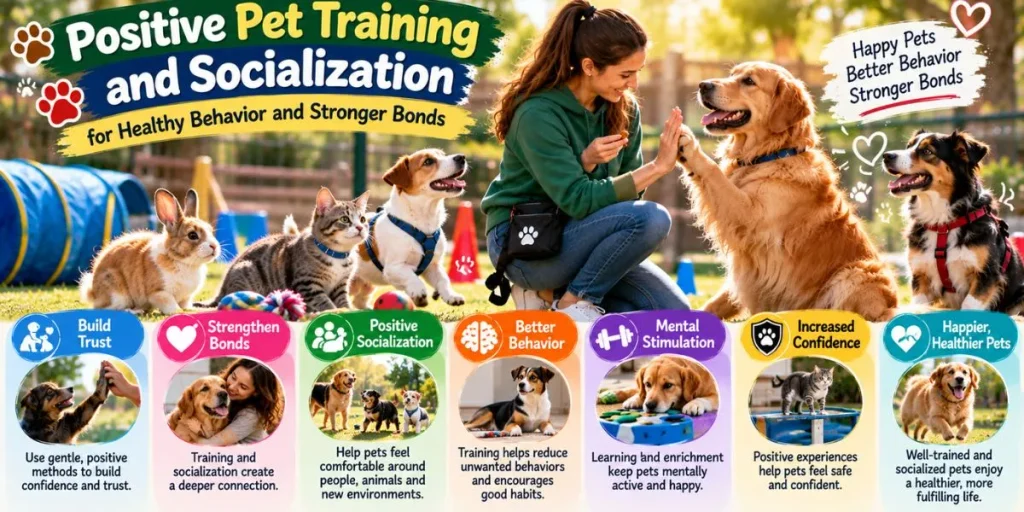
Training is not simply about teaching tricks. It helps pets understand expectations and can make everyday life safer and easier.
Positive reinforcement can encourage desirable behaviors while helping build trust between pets and people.
For example, reward appropriate behavior with food rewards, play, praise, or another reward your pet values. Avoid methods that cause unnecessary fear or physical discomfort.
Socialization is also important. However, it should be thoughtful and appropriate to the individual animal.
Introduce pets gradually to new people, environments, sounds, animals, and experiences while paying attention to their body language.
If your pet becomes frightened or overwhelmed, give it space and adjust the situation rather than forcing interaction.
6. Create a Safe and Comfortable Home
A responsible pet owner takes time to identify potential hazards inside and outside the home.
Depending on the species, common risks can include:
- Toxic substances
- Medications
- Certain household chemicals
- Unsafe foods
- Electrical cords
- Small objects
- Open windows
- Unsafe plants
- Unsecured outdoor areas
- Dangerous toys
Store potentially hazardous materials securely and keep pets away from situations they cannot safely manage.
In addition, provide a comfortable resting area where your pet can relax without unnecessary disturbance.
Cats may benefit from elevated resting places, hiding spaces, scratching opportunities, and areas where they can observe their surroundings. Dogs may appreciate a quiet bed or designated resting area.
A safe environment should also support normal behaviors rather than simply restricting movement.
7. Keep Your Pet Properly Identified
Pets can become separated from their owners unexpectedly. Therefore, identification is an important part of responsible pet ownership.
Depending on your location and the animal, identification may include:
- Collar identification tags
- Microchipping
- Registration
- Current owner contact information
A microchip is not a substitute for visible identification when appropriate. Instead, the two can complement each other.
Most importantly, keep your contact information updated whenever your phone number, address, or other relevant details change.
AAHA guidance also emphasizes microchipping and keeping identification information current.
8. Maintain Good Grooming and Hygiene
Regular grooming supports comfort, cleanliness, and overall wellbeing.
Depending on the animal, responsible grooming may include:
- Brushing
- Bathing when appropriate
- Nail or claw care
- Ear care
- Dental care
- Coat maintenance
- Cleaning bedding and living spaces
Not every pet needs the same grooming routine. Long-haired animals, for example, may require more frequent brushing than short-haired animals.
Additionally, grooming sessions can provide opportunities to notice changes such as lumps, irritated skin, unusual odors, wounds, or other abnormalities.
If you notice something unusual, discuss it with your veterinarian rather than assuming it is harmless.
9. Understand Your Pet’s Emotional and Behavioral Needs
Responsible pet ownership also means learning how your animal communicates.
Pets may communicate through posture, movement, facial expressions, vocalizations, appetite, activity levels, and other behaviors.
For example, a sudden change in behavior may sometimes indicate fear, stress, discomfort, illness, or another underlying issue.
Because animals cannot explain what they are experiencing in words, owners need to pay attention to changes from their normal behavior.
Your article “Understanding Your Pet’s Behavior and Needs” can be linked here naturally to provide readers with a deeper guide to body language, communication, emotional needs, and enrichment.
Give Your Pet Appropriate Companionship
Social needs vary between species and individual animals.
Some pets enjoy frequent interaction, while others require more personal space. Therefore, learn your pet’s preferences rather than assuming every animal wants the same type of attention.
Respect signals that indicate your pet wants to rest or move away.
At the same time, provide positive interaction through appropriate play, gentle attention, training, and companionship.
10. Follow Local Pet Laws and Community Rules
Responsible pet owners also have responsibilities outside the home.
Depending on where you live, rules may cover:
- Pet licensing
- Identification
- Leash requirements
- Vaccination requirements
- Animal control
- Waste disposal
- Housing restrictions
- Travel requirements
Because laws differ between countries, states, cities, and municipalities, always check the rules that apply to your location.
Furthermore, being considerate of neighbors is part of responsible pet ownership.
Clean up after your pet, prevent avoidable nuisance behavior, and keep animals safely controlled in public spaces.
11. Practice Good Pet Hygiene and Preventive Parasite Control
Parasites such as fleas, ticks, heartworms, and intestinal parasites can affect pets and, in some situations, create risks for people.
Consequently, parasite prevention should be part of an individualized veterinary care plan.
AAHA notes that parasite prevention should be tailored to the pet’s lifestyle, health, age, and regional risks.
Don’t choose a medication simply because another pet uses it. Products can differ by species, weight, age, health status, and other factors.
Instead, ask your veterinarian which preventive approach is appropriate.
Good household hygiene also matters. Wash hands appropriately after handling pets, pet food, waste, or potentially contaminated materials.
12. Prepare for Pet Emergencies
Emergencies can happen even when you provide excellent care.
Therefore, responsible pet ownership includes having an emergency plan before you actually need one.
Keep important information accessible, including:
- Your veterinarian’s contact information
- Emergency veterinary clinic details
- Vaccination records
- Medication information
- Identification information
- Relevant medical history
- Emergency caregiver contact information
You should also know how you will safely transport your pet if urgent veterinary care is necessary.
For larger emergencies such as severe weather or evacuation, consider how your pet will be transported, where you can temporarily stay, and what supplies you will need.
13. Budget for the Real Cost of Pet Ownership
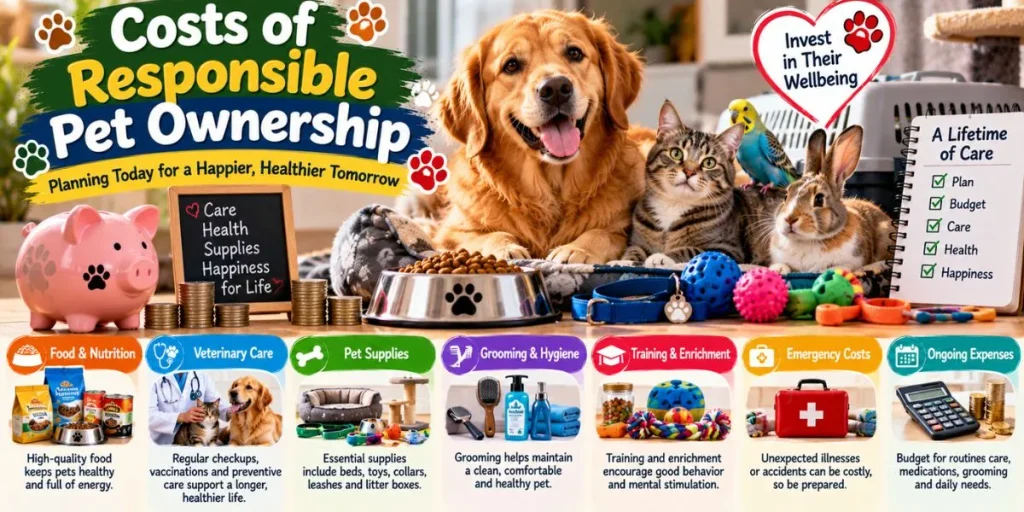
Pets can bring enormous companionship, but they also require financial planning.
The cost of responsible pet ownership can include:
- Food
- Veterinary examinations
- Vaccinations
- Parasite prevention
- Dental care
- Grooming
- Training
- Toys and enrichment
- Bedding
- Identification
- Emergency treatment
- Pet sitting or boarding
- Transportation
Furthermore, unexpected veterinary expenses can be significant.
AAHA recommends that prospective and current owners consider the costs of routine healthcare and plan financially for lifetime pet care.
Therefore, before getting a pet, create a realistic budget rather than focusing only on the initial adoption or purchase cost.
14. Make Responsible Decisions About Reproduction
Reproductive decisions should be made carefully and with veterinary guidance.
Unplanned litters can contribute to animal welfare challenges and create significant responsibilities for owners.
Discuss reproductive options with your veterinarian, including whether spaying or neutering is appropriate and when it should be considered for your particular pet.
The right timing can depend on factors such as species, breed, age, health, and individual circumstances. Therefore, avoid relying on one-size-fits-all advice.
15. Plan for Every Stage of Your Pet’s Life
Your pet’s needs will change over time.
Puppies and kittens often need intensive socialization, training, supervision, and age-appropriate healthcare. Adult animals may require stable routines and ongoing preventive care. Senior pets may need additional monitoring, environmental adjustments, or changes to nutrition and activity.
Therefore, responsible pet ownership means adapting your care routine as your animal ages.
Pay attention to changes in mobility, appetite, sleep, behavior, weight, and activity.
If something changes noticeably, discuss it with your veterinarian.
16. Plan for Travel, Work, and Lifestyle Changes
Your responsibilities don’t disappear when you leave home.
Before traveling, determine whether your pet will travel with you, stay with a trusted caregiver, board at an appropriate facility, or remain at home with reliable care.
Provide the caregiver with clear instructions covering:
- Feeding schedule
- Medication
- Exercise
- Behavior
- Veterinary information
- Emergency contacts
- Identification details
Similarly, consider your pet when making major lifestyle changes such as moving, changing jobs, or welcoming a new family member.
A little preparation can prevent unnecessary stress.
17. Know When Your Pet Needs Professional Help
Responsible owners don’t try to solve every problem alone.
Contact a veterinarian when you notice concerning changes such as:
- Sudden appetite changes
- Unusual thirst
- Significant weight changes
- Persistent vomiting or diarrhea
- Difficulty breathing
- Sudden mobility problems
- Signs of pain
- Major behavior changes
- Persistent anxiety or fear
- Unusual aggression
- Significant changes in sleeping habits
Behavior changes can sometimes have medical causes. AAHA specifically recommends discussing behavioral concerns with a veterinarian because underlying health problems may contribute to behavioral changes.
For persistent behavioral problems, a qualified trainer or veterinary behavior professional may also be appropriate.
Common Mistakes Responsible Pet Owners Should Avoid
Even caring owners can make mistakes. The important thing is to recognize them and improve.
1. Choosing a Pet Impulsively
Research the animal’s needs before making a commitment.
2. Underestimating Long-Term Costs
Consider routine care as well as unexpected expenses.
3. Skipping Preventive Veterinary Care
Pets may hide signs of illness, so waiting until they look sick can mean missing opportunities for early intervention.
4. Ignoring Dental Health
Dental care is part of overall preventive healthcare. AAHA includes dental assessment and care within its preventive-care framework.
5. Providing Too Little Exercise or Enrichment
Pets need appropriate opportunities to move, explore, play, and engage their minds.
6. Using Fear-Based Training
Training should aim to teach desired behavior while maintaining trust and minimizing unnecessary stress.
7. Ignoring Changes in Behavior
A sudden change may deserve attention rather than being dismissed as simple stubbornness.
8. Forgetting Identification
Even indoor pets can escape. Keep identification information current.
9. Failing to Prepare for Emergencies
A basic emergency plan can make stressful situations easier to manage.
10. Treating Every Pet the Same
Individual animals have different needs. Age, species, breed, health, temperament, and lifestyle all matter.
Responsible Pet Ownership Checklist
Use this simple checklist to review your pet-care routine:
- Choose a pet appropriate for your lifestyle
- Provide species-appropriate nutrition
- Provide fresh, clean water
- Schedule appropriate veterinary checkups
- Keep preventive healthcare up to date
- Monitor your pet’s weight and condition
- Provide regular exercise
- Provide mental stimulation and enrichment
- Use appropriate positive training
- Provide safe socialization
- Maintain good grooming and hygiene
- Keep your home pet-safe
- Provide appropriate identification
- Keep identification information updated
- Follow local pet regulations
- Maintain parasite prevention as recommended
- Prepare an emergency plan
- Budget for routine and unexpected care
- Adapt care as your pet ages
- Seek professional help when needed
Frequently Asked Questions About Responsible Pet Ownership
What is responsible pet ownership?
Responsible pet ownership means consistently meeting your pet’s physical, emotional, behavioral, social, and healthcare needs throughout its life. It includes nutrition, veterinary care, exercise, enrichment, training, safety, identification, hygiene, and financial preparation.
What are the main responsibilities of owning a pet?
The main responsibilities include providing appropriate food and water, veterinary care, exercise, mental stimulation, safe housing, grooming, training, social interaction, identification, preventive healthcare, and emergency planning.
How can I become a more responsible pet owner?
Start by learning about your pet’s specific needs. Then create consistent routines for feeding, exercise, enrichment, grooming, preventive care, and training. Additionally, maintain regular communication with your veterinarian and pay attention to behavioral or physical changes.
Why is veterinary care important for pets?
Regular veterinary care supports preventive healthcare and can help identify health problems earlier. Veterinary visits can also address vaccinations, parasite prevention, dental health, nutrition, behavior, and age-specific needs.
How important is mental stimulation for pets?
Mental stimulation is an important part of a healthy pet lifestyle. Appropriate interactive toys, training, exploration, play, and enrichment can help animals engage in natural behaviors and avoid boredom.
Should every pet be microchipped?
Microchipping is an important identification option for many pets, but requirements and recommendations can vary by species and location. Ask your veterinarian about microchipping and keep the associated contact information current.
How much does responsible pet ownership cost?
Costs vary substantially depending on species, location, age, health, lifestyle, and individual needs. Common expenses include food, veterinary care, preventive treatments, grooming, training, enrichment, and emergency care. Creating a realistic annual budget can help you prepare.
What should I do if my pet’s behavior suddenly changes?
A sudden or significant behavior change should not automatically be dismissed as a training issue. Contact your veterinarian, particularly if the change occurs alongside appetite changes, pain, mobility problems, unusual elimination, lethargy, or other physical symptoms.
Final Thoughts on Responsible Pet Ownership
Responsible pet ownership is ultimately about commitment.
A pet depends on you for many of the things that make life safe, healthy, comfortable, and enriching. Therefore, being a good pet owner means looking beyond the basics and considering the whole animal.
Provide appropriate nutrition. Schedule preventive veterinary care. Offer exercise and mental stimulation. Train with patience. Create a safe home. Maintain identification. Prepare financially. Most importantly, learn to understand your pet as an individual.
At the same time, remember that responsible pet care is not about being perfect. It is about being prepared, paying attention, asking for professional guidance when necessary, and continuously adapting to your pet’s changing needs.
When you make these practices part of everyday life, you create more than a care routine. You build a relationship based on trust, safety, companionship, and mutual wellbeing.
That is the heart of responsible pet ownership: giving your animal the care and commitment it deserves for its entire life.
Pet Care Disclaimer
This article provides general educational information about responsible pet ownership and is not a substitute for individualized veterinary advice. Pet needs vary by species, age, breed, health status, lifestyle, and location. Always consult a qualified veterinarian for recommendations specific to your pet, particularly when your animal shows signs of illness, injury, pain, or significant behavioral change.
