
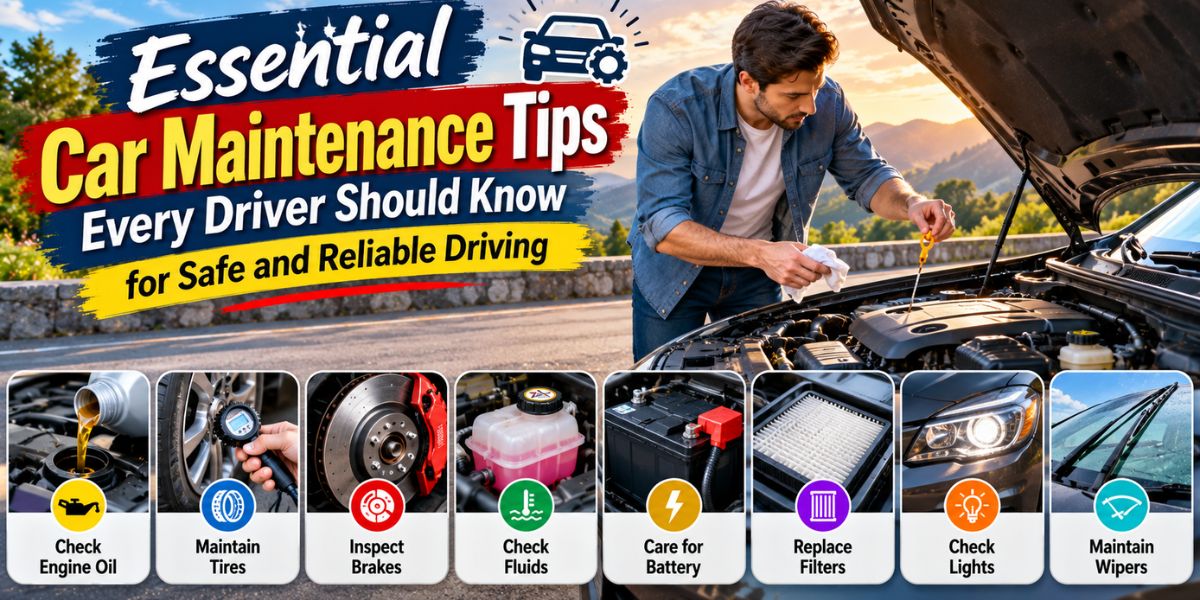
Essential car maintenance tips Regular vehicle care is one of the simplest ways to keep your car safe, reliable, and comfortable to drive. However, many drivers only think about maintenance when a warning light appears or something stops working.
The good news is that basic car maintenance does not always require advanced mechanical knowledge. By checking essential components regularly and following your manufacturer’s recommended service schedule, you can identify potential problems earlier and help keep your vehicle in good condition.
In this guide, we will cover the most important car maintenance tips every driver should know, from checking engine oil and tires to maintaining brakes, fluids, batteries, lights, and other essential systems.
Why Regular Car Maintenance Is Important
Regular maintenance helps you understand the condition of your vehicle before a small issue becomes a major problem. Moreover, routine inspections can help maintain vehicle performance, reliability, and safety.
For example, checking tire pressure takes only a few minutes, while ignoring an underinflated or damaged tire can create much bigger problems. Similarly, paying attention to unusual sounds, warning lights, or fluid leaks can help you know when professional inspection may be necessary.
Therefore, preventive maintenance should be part of every driver’s routine.
1. Check Your Engine Oil Regularly
Engine oil helps lubricate important engine components and supports smooth operation. Therefore, checking the oil level is one of the most basic car maintenance tasks.
Follow your owner’s manual to determine how to check the oil and which type of oil your vehicle requires. If the oil level is consistently low, appears unusual, or you notice an oil leak, have the vehicle inspected. essential car maintenance tips
Most importantly, do not rely on a generic oil-change interval. Maintenance requirements can vary between vehicles, so follow the manufacturer’s recommendations.
2. Check Your Tire Pressure
Tires are among the most important safety components of your vehicle. Consequently, proper tire maintenance should never be overlooked.
Check your tire pressure regularly, preferably when the tires are cold. Use the pressure recommended by your vehicle manufacturer, which is generally found on the driver’s door placard or in the owner’s manual.
Also, inspect the tires for cuts, cracks, bulges, punctures, and uneven wear. Don’t forget the spare tire if your vehicle has one.
3. Inspect Tire Tread and Wear
Proper tire pressure is only part of tire maintenance. You should also examine the tread and overall condition of your tires.
Uneven tread wear may indicate problems such as improper inflation, alignment issues, or other mechanical concerns. Furthermore, vibrations or unusual tire noise should not be ignored.
If your vehicle requires tire rotation, follow the schedule and rotation pattern recommended by the manufacturer.
4. Pay Attention to Your Brakes
Your braking system deserves regular attention because it directly affects vehicle safety.
Watch for warning signs such as squeaking, grinding, vibration, a soft brake pedal, or changes in braking performance. These symptoms can indicate that your braking system needs inspection.
Brake components can also wear differently depending on driving habits and conditions. Therefore, have a qualified technician inspect the brakes when you notice unusual behavior or when maintenance is due.
5. Check Your Car’s Fluids
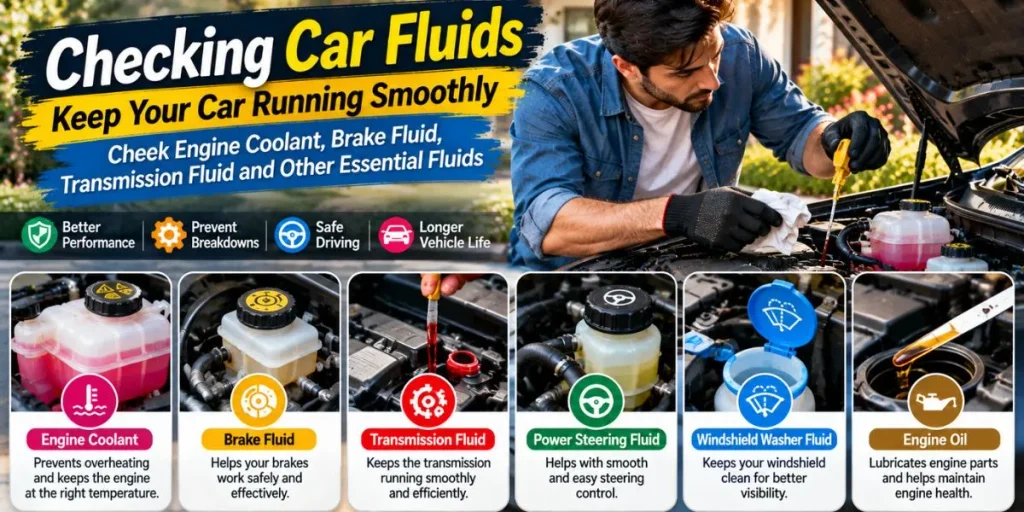
Fluids play an important role in keeping different vehicle systems working properly.
Depending on your vehicle, important fluids may include:
- Engine coolant
- Brake fluid
- Transmission fluid
- Power steering fluid
- Windshield washer fluid
- Engine oil
Check fluid levels according to the instructions in your owner’s manual. In addition, look underneath the vehicle for signs of leaks.
Never open a hot, pressurized cooling system. If you suspect a coolant problem, allow the vehicle to cool and seek professional assistance when necessary.
6. Maintain Your Car Battery
A weak battery can leave you stranded unexpectedly. Fortunately, basic battery care can help you identify potential problems. essential car maintenance tips
Look for visible corrosion around the battery terminals and check that connections are secure. Also, pay attention if your engine takes longer than usual to start.
Battery life varies depending on the vehicle, climate, driving habits, and battery type. Therefore, have the battery tested if you notice starting problems or other electrical symptoms.
7. Replace Air Filters When Needed
Your vehicle may have several filters, including an engine air filter and cabin air filter.
The engine air filter helps keep unwanted particles away from the engine’s intake system, while the cabin air filter helps filter air entering the passenger compartment.
Replacement intervals vary by vehicle and driving conditions. Consequently, check your owner’s manual instead of assuming every car needs a filter replacement at the same mileage.
Read More: Beginner-Friendly Techniques to Improve Your Artistic Skills
8. Check Lights and Windshield Wipers
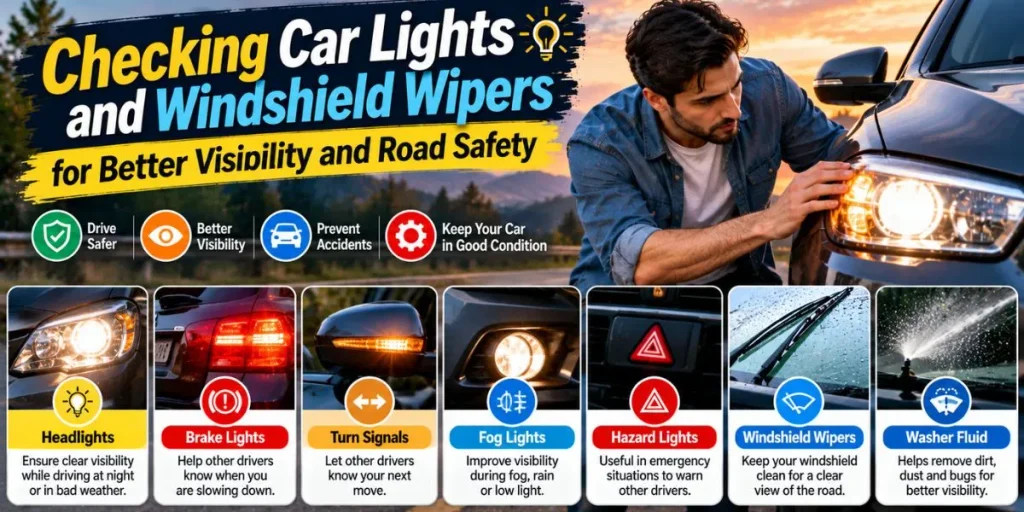
Good visibility is essential for safe driving. Therefore, regularly check your headlights, brake lights, turn signals, hazard lights, and other exterior lights.
At the same time, inspect your windshield wipers. If they leave streaks, skip across the glass, or fail to clear water properly, replacement may be necessary.
Also, keep the windshield clean and maintain an adequate supply of windshield washer fluid.
9. Never Ignore Dashboard Warning Lights
Dashboard warning lights are designed to alert you when your vehicle detects a potential problem. essential car maintenance tips
Some warnings may require immediate attention, while others may indicate that service is needed soon. For this reason, learn what the warning lights in your vehicle mean by consulting the owner’s manual.
Do not simply ignore a warning because the car still appears to drive normally. If a warning indicates a serious problem, stop driving when it is safe to do so and seek professional assistance.
10. Listen for Unusual Sounds
Your car can sometimes give you an early warning through unusual sounds.
Pay attention to:
- Grinding
- Squealing
- Knocking
- Rattling
- Humming
- Clicking
- New vibrations
Although not every unusual sound means there is a serious problem, a sudden change should be investigated. Early attention can sometimes prevent a minor issue from developing into a more expensive repair.
11. Follow Your Manufacturer’s Maintenance Schedule
One of the most important car maintenance tips is also one of the easiest: follow your vehicle’s recommended maintenance schedule.
Your owner’s manual can tell you when specific inspections and services should be performed. These schedules may depend on mileage, time, vehicle design, and driving conditions.
Keep your service records organized as well. A clear maintenance history can make it easier to track previous work and identify upcoming service requirements.
12. Inspect Belts and Hoses
Belts and hoses are easy to overlook because they are not always visible during everyday driving.
During routine servicing, ask a qualified technician to inspect them for signs of cracking, fraying, leaks, looseness, or other damage.
Replacing a worn component at the appropriate time can help prevent unexpected breakdowns.
13. Keep Your Car Clean
Car care is not only about mechanical components. Keeping your vehicle clean can also help protect its interior and exterior.
Remove dirt, mud, and other contaminants regularly. Clean the windshield, headlights, mirrors, and windows so you can maintain good visibility.
Additionally, inspect areas where dirt or moisture may accumulate. Proper cleaning can help you notice scratches, corrosion, leaks, or other changes earlier.
14. Take Extra Care in Hot Weather
Extreme heat can place additional demands on a vehicle. Therefore, drivers in hot climates should pay particular attention to tires, coolant, batteries, and air conditioning.
Check tire pressure regularly and monitor the vehicle for signs of overheating. Also, make sure the air-conditioning system is operating properly, particularly before long journeys.
If you notice overheating, unusual smells, or significant changes in vehicle performance, stop safely and seek professional help.
15. Check Your Car Before a Long Road Trip
Before a long journey, take a few minutes to perform a basic vehicle inspection.
Check:
- Tire pressure and condition
- Engine oil
- Coolant and other accessible fluids
- Brakes
- Battery condition
- Lights
- Windshield wipers
- Spare tire
- Emergency equipment
Furthermore, make sure your vehicle is up to date with its scheduled maintenance. A quick inspection before leaving can help reduce the possibility of avoidable problems during your trip.
Simple Car Maintenance Checklist
A simple routine can make vehicle maintenance much easier.
Regularly check:
- Tire pressure
- Tire condition
- Engine oil
- Accessible fluid levels
- Exterior lights
- Windshield wipers
- Dashboard warning lights
- Battery condition
- Unusual noises or vibrations
According to the manufacturer’s schedule:
- Oil and filter service
- Tire rotation
- Brake inspection
- Air-filter replacement
- Major vehicle servicing
- Other manufacturer-recommended inspections
Remember that maintenance intervals differ between vehicles. Your owner’s manual should always be your primary reference.
Common Car Maintenance Mistakes to Avoid
Even responsible drivers can make simple maintenance mistakes. Avoid delaying scheduled service, ignoring warning lights, driving with damaged tires, using incorrect fluids, or assuming every vehicle follows the same maintenance schedule.
Likewise, don’t attempt complex repairs simply because a tutorial makes them look easy. Some repairs require specialized tools and technical knowledge.
Which Maintenance Tasks Can You Do Yourself?
Several basic checks can usually be performed by drivers, including checking tire pressure, inspecting tires visually, checking certain fluid levels, replacing wiper blades, and checking lights.
However, more complex work such as brake repairs, major engine repairs, transmission work, wheel alignment, and difficult electrical diagnostics is generally better handled by a qualified professional.
Frequently Asked Questions
How often should I maintain my car?
Maintenance frequency depends on your vehicle, mileage, age, driving conditions, and manufacturer’s recommendations. Follow the maintenance schedule in your owner’s manual.
What are the most important car maintenance tasks?
Important tasks include checking tires, engine oil, fluids, brakes, battery, lights, filters, and dashboard warning lights.
How often should I check tire pressure?
Check tire pressure regularly and before long trips. For accurate readings, check the tires when they are cold and use the pressure recommended by the vehicle manufacturer.
What are signs that my car needs servicing?
Warning lights, unusual sounds, vibrations, fluid leaks, starting problems, unusual smells, and changes in braking or handling can all indicate that your vehicle needs attention.
Can I perform basic car maintenance myself?
Yes. Many simple checks, such as tire-pressure checks, visual inspections, fluid-level checks, and wiper replacement, can be performed by drivers. However, complex repairs should be handled by qualified professionals.
Final Thoughts
Regular vehicle care does not have to be complicated. By following these essential car maintenance tips, you can create a simple routine that helps you monitor your vehicle and identify potential problems earlier.
Start with the basics: check your tires, monitor fluids, maintain the engine, pay attention to brakes and warning lights, and follow the manufacturer’s service schedule. Most importantly, don’t ignore changes in how your vehicle sounds, feels, or performs.
A few minutes of regular attention can go a long way toward keeping your car reliable, safe, and ready for the road.
